Managing a Sales Department: What Results Depend On and What the Head Should See Every Day
Sales4 min read
Managing a sales department without micromanagement: which processes to build, which numbers to check every day and how to see the work of the whole team.

Managing a sales department means setting up a process in which managers know what to do with each client and the head sees where the process is slipping. A good head of sales doesn't sell for the managers or stand behind them — they notice in time where their help is needed.
Many heads of sales are former top-performing managers. They sell brilliantly themselves, but managing requires a different approach: through the process and numbers rather than personal involvement in every deal. Without tools, this turns into endless questions to the team.
Three pillars of managing a sales department
| Pillar | What it is | What to see |
|---|---|---|
| Process | Stages of working with a client from enquiry to payment | Where clients get stuck |
| Numbers | Metrics at each stage | Conversion, speed, revenue |
| Quality | How managers talk to clients | Tone, accuracy, next step |
Numbers worth checking every day
- New enquiries — how many came in and through which channels.
- First response speed — how quickly managers react.
- Stalled deals — what hasn't moved for longer than usual.
- Overdue tasks — which promises to clients haven't been kept.
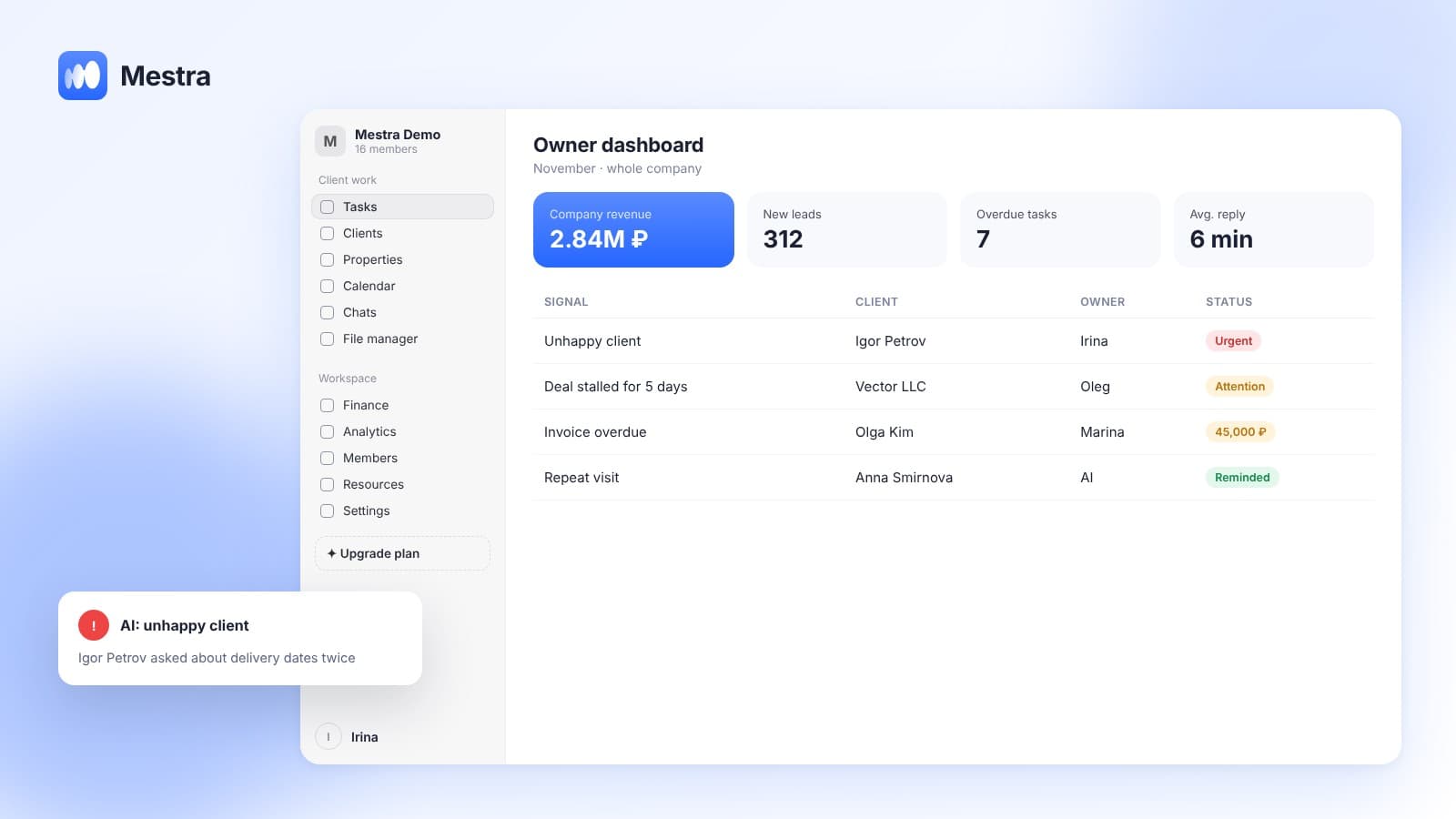
- Unhappy clients — who needs the head's attention today.
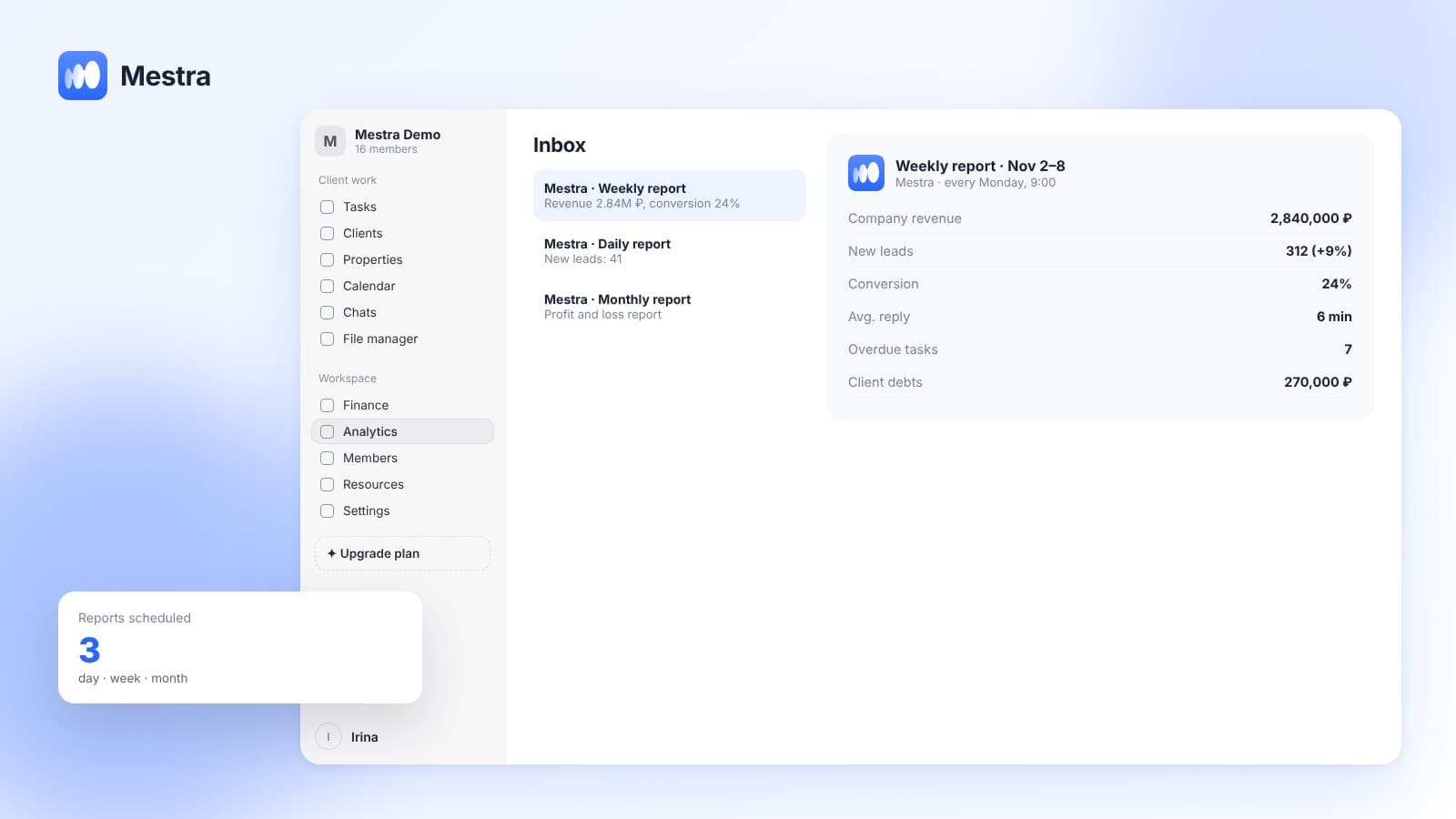
Revenue and conversion are more useful weekly: day to day they fluctuate too much.
Managing a sales department in one minute: warning signs
- The head learns about a lost deal from the manager, not from the system.
- Managers argue over whose client it is.
- When an employee leaves, their clients disappear along with the conversations.
- The report for management is assembled by hand on Fridays.
- Training newcomers means "sit next to me and watch".
How to manage without micromanagement
Micromanagement is a consequence, not a cause. The head asks "how's that client?" because they can't see the answer. When the process, numbers and conversations are available in one system, the questions disappear, and conversations with the team move from status updates to development: how to reply better, where we lose clients, what to change in the process.
AI strengthens this: it suggests the manager's next step in the conversation and assesses reply quality, while the head goes through specific conversations with the team.
An example in numbers
One-minute calculation:
- A department of six managers handles 300 enquiries a month with 12% conversion to payment: 36 deals.
- The head finds that 20% of enquiries get a reply after more than an hour.
- Automatic routing and AI replies out of hours remove this delay.
- If conversion on these 60 enquiries rises from 12% to 18%, that's 3–4 more deals a month.
- With an average bill of 50,000 ₽, that's about 180,000 ₽ of extra revenue without new enquiries.
How it works in Mestra
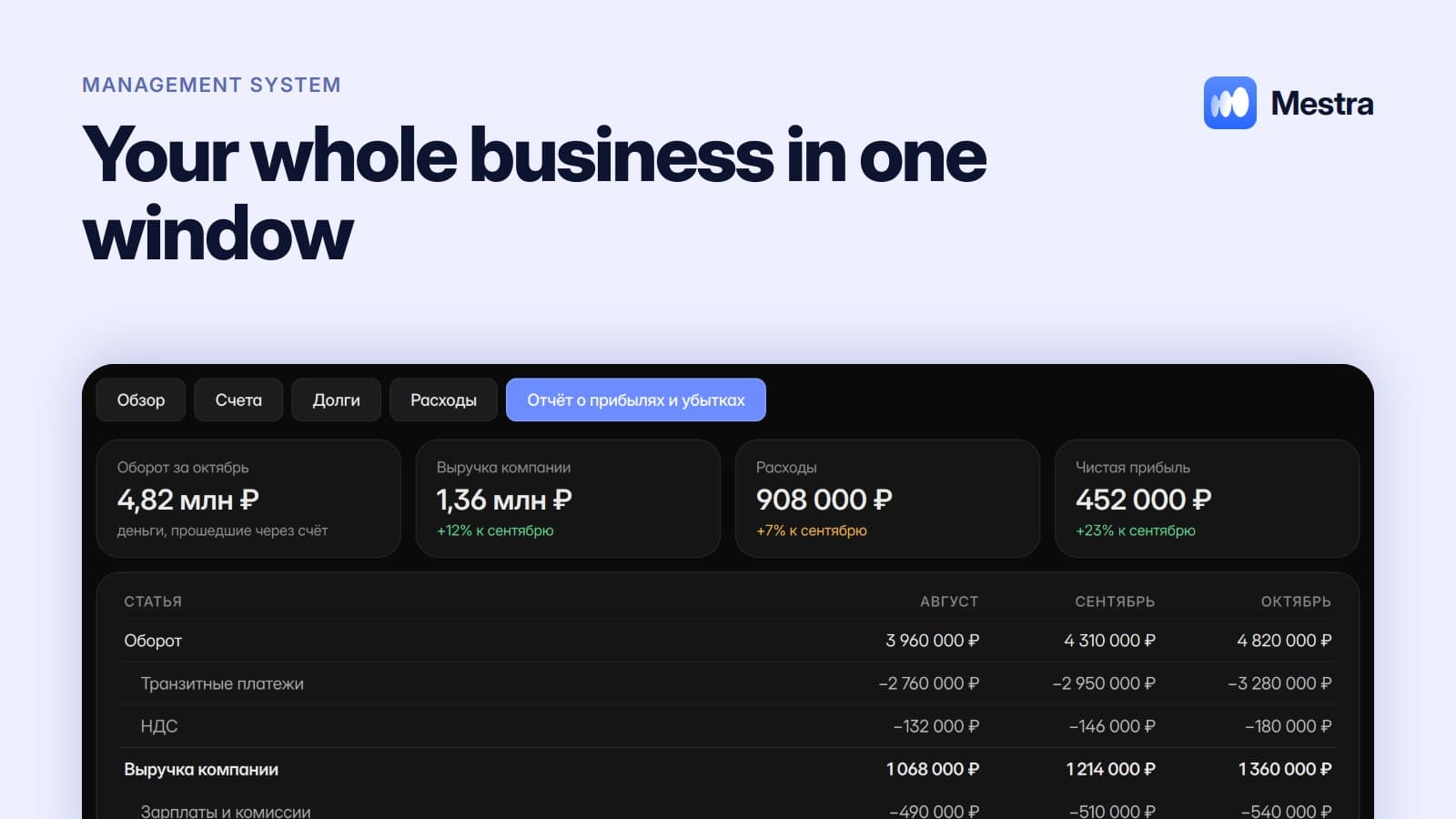
In Mestra, the head sees all the team's conversations from every channel, plus analytics by employee, channel, response speed, conversion and revenue. Enquiries are routed automatically by specialisation, workload and schedule. AI assesses managers' replies, suggests the next step and reports unhappy clients. Overdue items and stalled deals arrive as signals, and reports on a schedule.
How the sales department fits into the overall management system — in our article business management system. About building stages — in the sales funnel.

Related reading: sales department audit.
FAQ
What does managing a sales department involve?
Building the process of working with clients, monitoring key metrics and working on the quality of communication with clients.
Which metrics should a head of sales check?
Daily — new enquiries, response speed, stalled deals and overdue tasks; weekly — conversion and revenue.
How do you avoid micromanagement?
Make the process and numbers visible in the system so you don't have to ask managers for status updates.
How much does a CRM for a sales department cost?
In Mestra — from 390 ₽ per user per month incl. VAT, with no limit on users; AI from the Standard plan.
Bottom line
A sales department is managed through process and visibility, not questions. Mestra shows the head everything they need in one window — try it free for 15 days, no card required.