How Much Money You Can Take Out of a Business: A Rule of Thumb, an Example and 3 Owner Mistakes
Finance3 min read
How much money an owner can take out of a business: from net profit, after a reserve, taxes and growth. A worked example and the most common owner mistakes.

The account balance is a poor guide for the owner. It holds suppliers' money, taxes and clients' prepayments.
You can only take out what the company has genuinely earned and won't spend in the coming months.
One-minute calculation
- Take net profit from the profit and loss report.
- Set aside a reserve until it covers 1–3 months of fixed costs.
- Set aside 20–40% for growth.
- What's left is the amount you can take out.
Step 1. Start with net profit
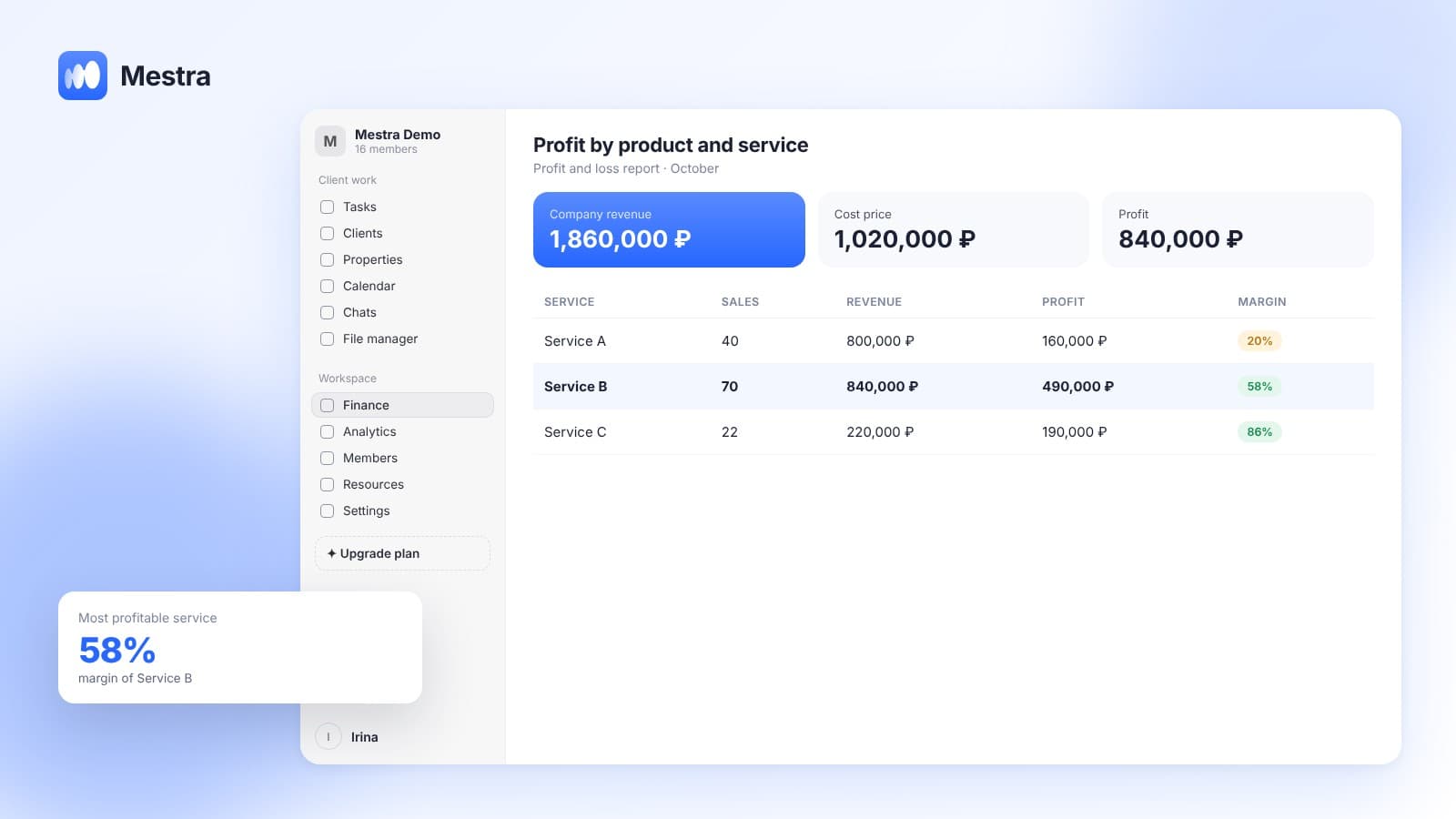
Net profit is the bottom line of the profit and loss report: revenue minus all expenses and taxes. See the profit and loss report.
Step 2. Set aside a reserve
The reserve is money for 1–3 months of fixed costs: salaries, rent, services. Until it's built up, it's better to leave most of the profit in the company.
Step 3. Budget for growth
New hires, advertising, equipment. Usually 20–40% of profit.
How can a founder legally take money out of a Russian LLC? Through dividends from net profit, a director's salary or payment under a contract. For a sole trader it's simpler: money can be withdrawn from the account at any time, but taxes are still paid on income.
Example
| Item | Amount |
|---|---|
| Net profit for the month | 400,000 ₽ |
| To the reserve (until it's built up) | 120,000 ₽ |
| For growth | 100,000 ₽ |
| Available to the owner | 180,000 ₽ |
3 owner mistakes
- Withdrawing based on the account balance. Then there isn't enough for taxes and salaries — see cash gap.
- Not paying yourself at all. The cost of the owner is hidden, and the business looks more profitable than it is.
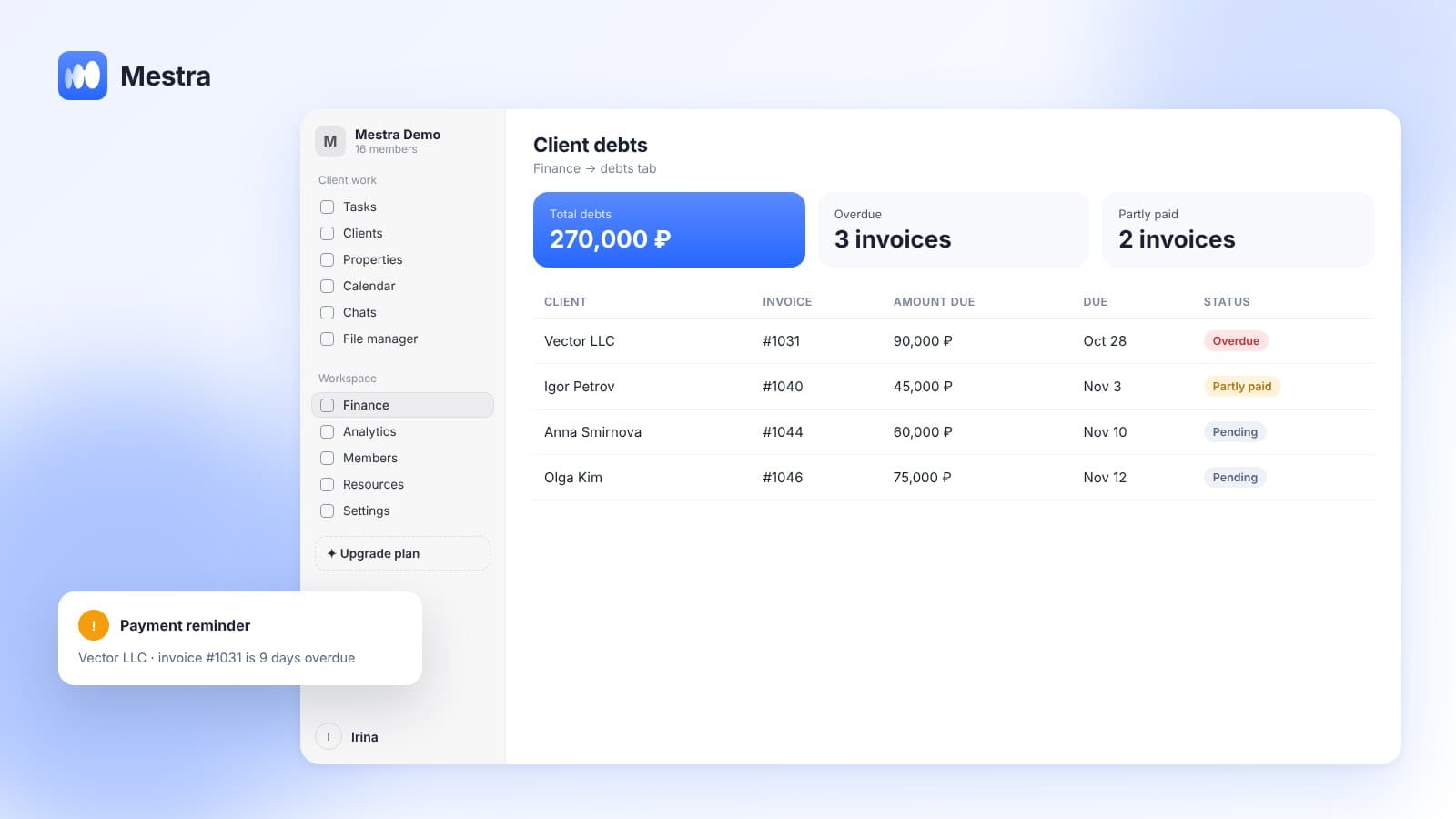
- Withdrawing money "frozen" in client debts. There's profit but no cash — see profit on paper, no cash.

For an LLC, the withdrawal method matters: dividends are distributed from net profit by decision of the members and are subject to personal income tax, while a director's salary is subject to insurance contributions. It's best to discuss the scheme with your accountant.
How it works in Mestra
- Profit and loss report and detailed financial reports.
- Several accounts and cash desks: bank, cash and cards, in rubles, dollars and euros; transfers between accounts with fees.
- Expense items in 7 groups: cost of sales, marketing, staff, premises, operations, finance and legal, other.
- Permissions — financial data is visible only to those you allow.
FAQ
Can you take money out every month?
Yes, if the reserve is already built up and profit is stable. In a seasonal business, quarterly is more convenient.
How much should you pay yourself as director?
A market salary for your work — that's a company expense. Your share of profit is separate, as owner's income.
What if there's no profit?
Don't withdraw. First find out where the company is losing money: cost of sales, team costs or advertising.
Bottom line
Taking money out is a decision based on the profit and loss report, not on the account balance.
Reserve and growth first, then the owner. In Mestra, net profit and financial reports are visible without manually combining spreadsheets.