Profit on Paper, No Cash: How the Cash Flow Statement Differs From the P&L
Finance4 min read
Why the report shows a profit but the account is empty: the difference between the P&L and the cash flow statement, 5 causes and what to do about it.

"According to the report we're 400 thousand in the black, but there's nothing to pay salaries with" is one of the most common complaints from business owners.
It's not an accountant's mistake. It's the difference between profit and cash.
One-minute calculation
- Take net profit for the month.
- Subtract clients' unpaid invoices.
- Subtract stocking-up purchases and prepayments to suppliers.
- Subtract loan repayments and owner withdrawals.
- What's left is close to the real change in cash in the account.
Two reports, two questions
| P&L | Cash flow | |
|---|---|---|
| Question | Did we make money? | How much money came in and went out? |
| When a sale is counted | At the time of sale | At the time of payment |
| Stocking up | Doesn't reduce profit | Reduces cash |
| A loan | Not profit | Cash inflow |
What a cash flow statement is
A cash flow statement is a report of all receipts and payments across accounts and cash desks for a period. It shows how much money there was at the start, how much came in and went out, and how much is left. Unlike the P&L, it includes loans, stocking-up purchases and owner withdrawals.
5 reasons profit doesn't turn into cash
- Clients pay with a deferral. The sale is already in the report; the money comes in 30 days.
- Prepayments to suppliers. The money has gone, but the goods haven't been sold yet.
- Stocking up. The warehouse is full, the account is empty.
- Loan repayments. The loan principal isn't an expense in the P&L, but the money leaves.
- The owner withdraws more than the profit. See how much money to take out of a business.
What to do
- Review the P&L and cash flow together, every month.
- Keep an eye on unpaid invoices — see accounts receivable.
- Plan large payments in advance so you don't fall into a cash gap.
- Shorten deferrals: take prepayment and invoice straight after agreement.

In accounting, revenue is recognised on an accrual basis — when goods are transferred or services delivered, not when payment is received. That's exactly why the profit and loss report and cash flow for the same month almost never match.
How it works in Mestra
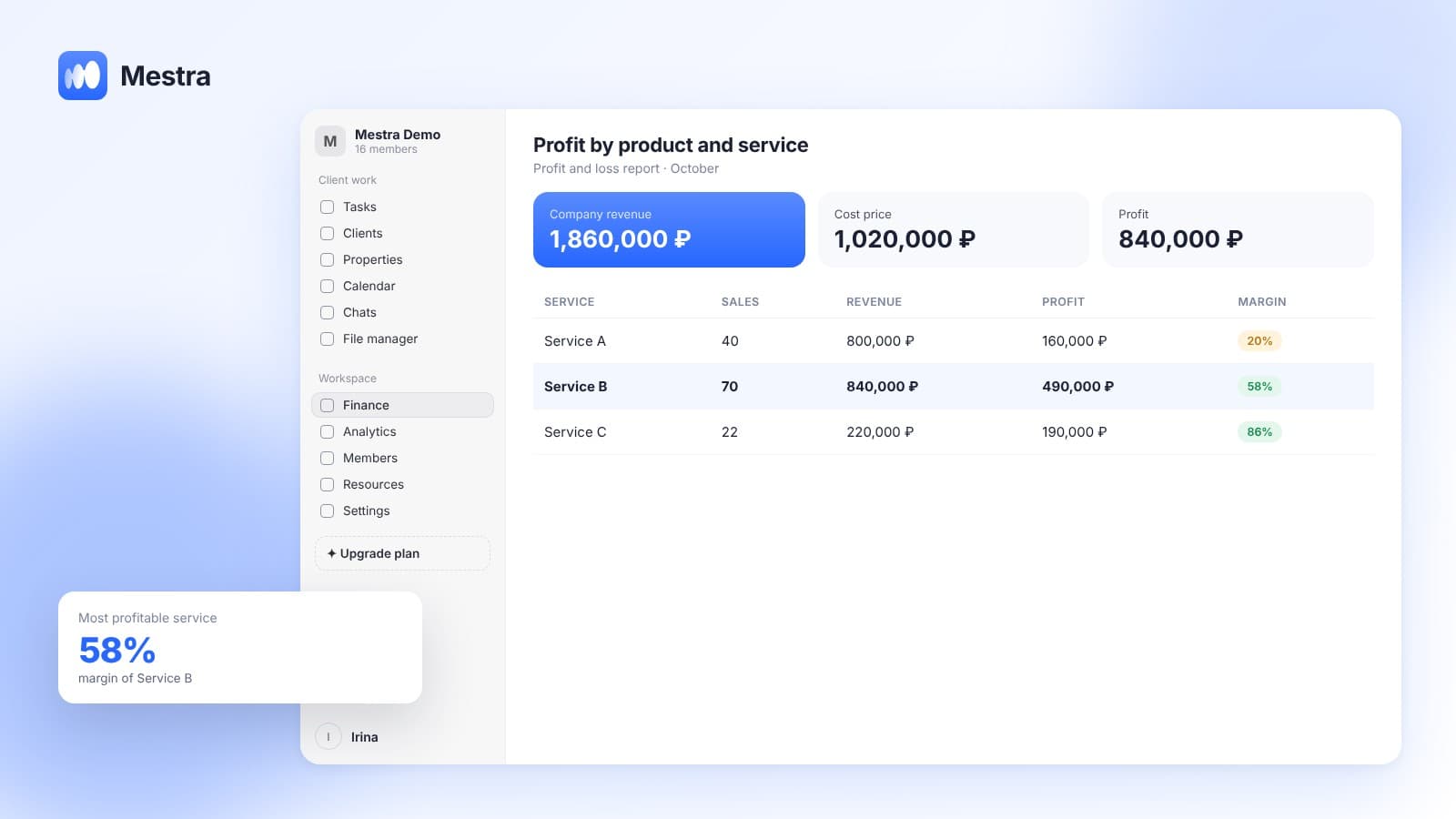
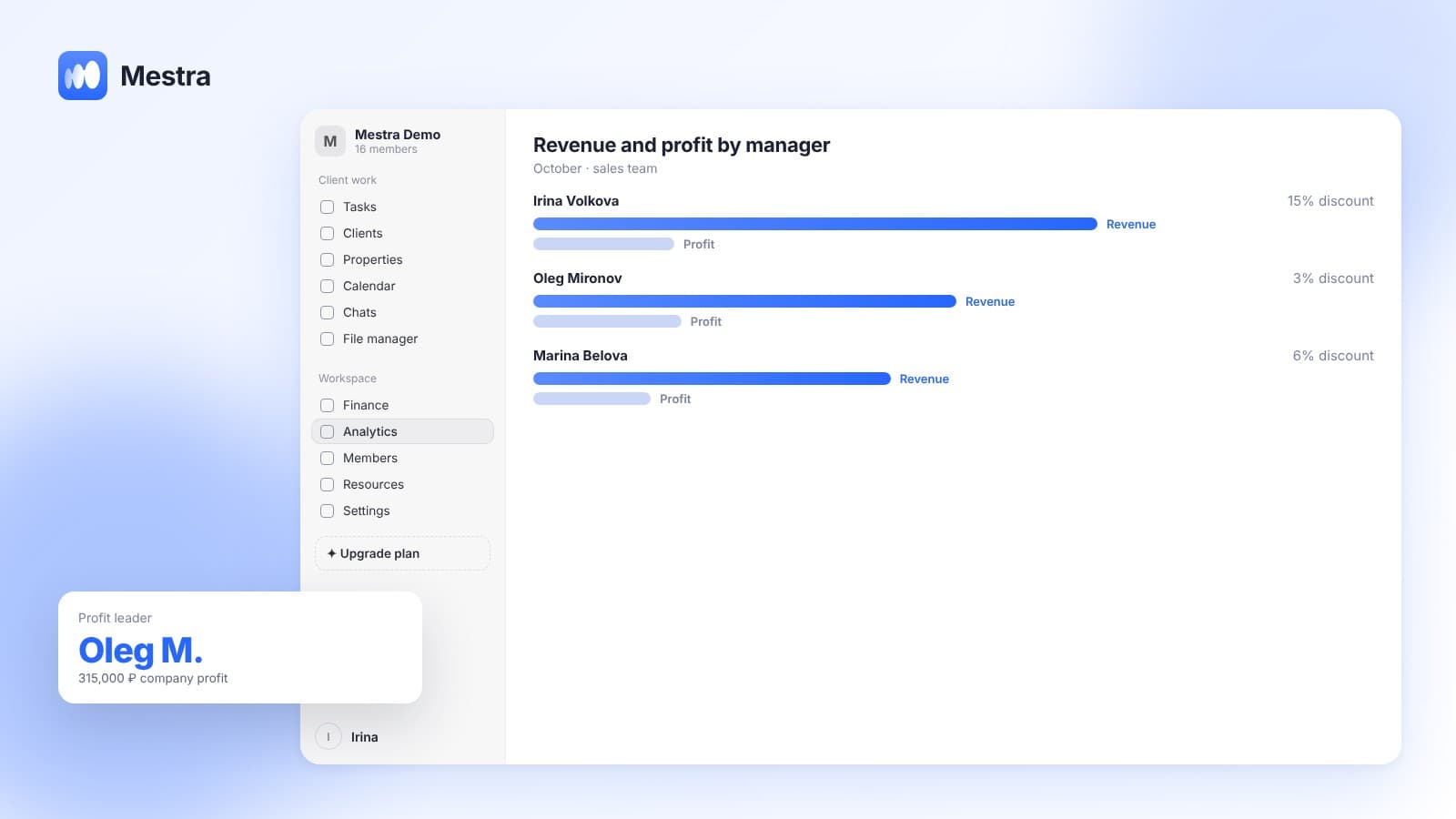
- Profit and loss report and detailed financial reports.
- Every receipt and payment is recorded with a date, account and category — you can see where the money went.
- Several accounts and cash desks: bank, cash and cards, in rubles, dollars and euros; transfers between accounts with fees.
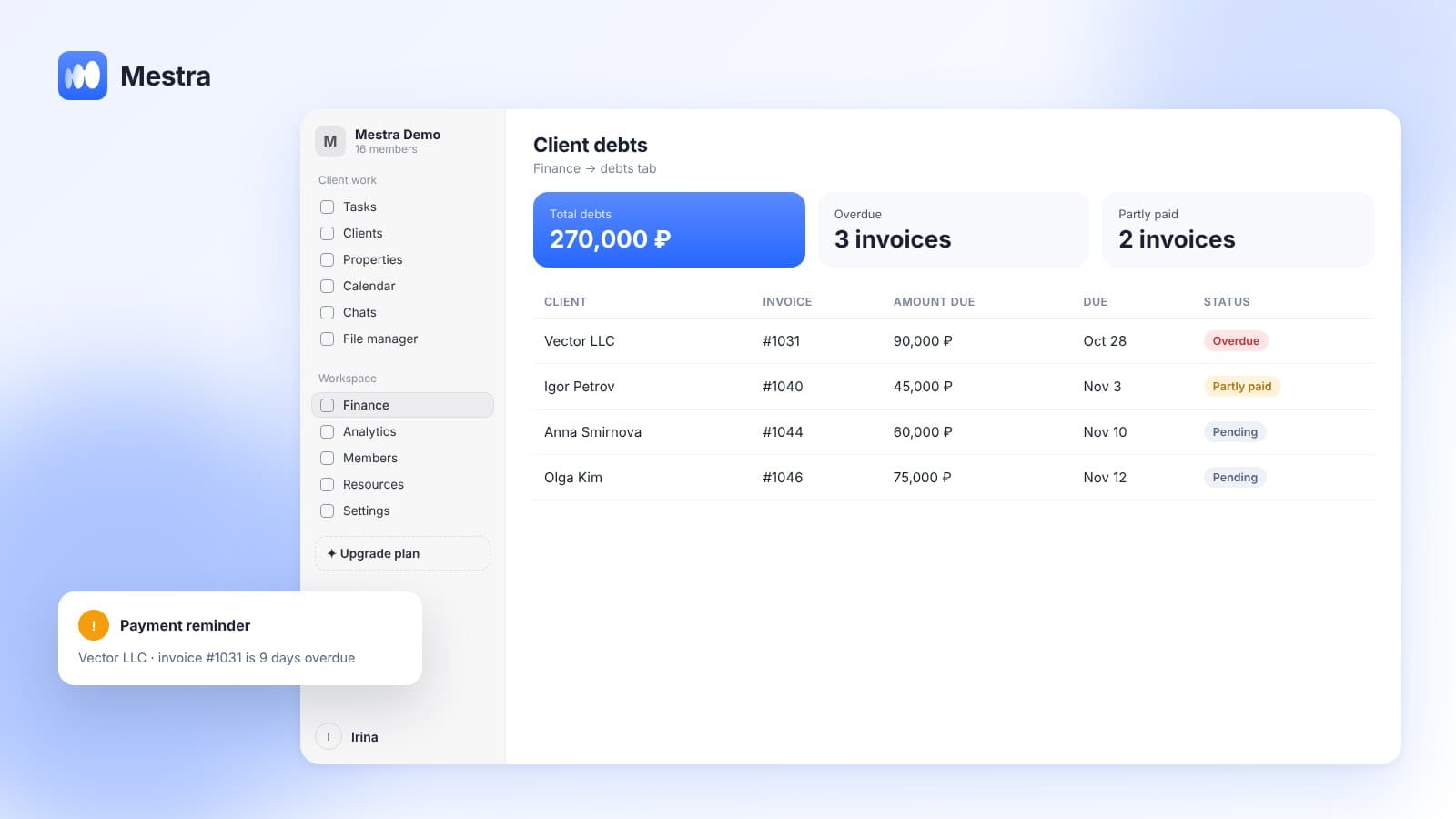
- Debts tab: all unpaid invoices, days overdue and the client's debt right in their card.
- Payment reminders: a "Remind in chat" button and automatic reminders — a day before the deadline, on the day and 3 days after.
FAQ
Which is more important — the P&L or cash flow?
Both. The P&L shows whether the business model is right. Cash flow shows whether the company will survive the next month.
Can a profitable company go bankrupt?
Yes. If money is frozen in client debts and inventory, a profitable company may be unable to pay suppliers and staff.
How do you quickly find out where the money went?
Compare the P&L and cash flow for the month: the difference is almost always explained by unpaid invoices, purchases and withdrawals.
Bottom line
Profit is an assessment of the result; cash is the reality in the account. Running a business on profit alone is risky.
Keep both reports in front of you and keep track of unpaid invoices. In Mestra, financial reports and client invoices are in one system.