How to Issue an Invoice: Required Details, 22% VAT and a Payment Schedule
Guides5 min read
How to issue an invoice in 2026: required details, 22% VAT, prepayment and instalments, partial payment and overdue reminders. An example and common mistakes.

A good invoice answers four questions for the client: whom to pay, for what, how much and by what date. If even one is unanswered, the money arrives later — the client's accountant puts the payment off and writes to you for clarification.
Formally, an invoice isn't one of the mandatory primary documents, but it's what the client pays against. Below: what to put in it, an example with 22% tax, how to split payment into parts and where companies lose the most time.
The process in one minute
- Give it a sequential number, a date and the last day for payment.
- State your company in full: name, tax ID (INN), KPP and bank details.
- Add the payer and describe each item: what, how many, at what price.
- Calculate the tax on each line and the total due.
- If the amount is large, split it into payments with dates or events.
What to include on an invoice
| Block | Contents |
|---|---|
| Header | Sequential number, date, payment deadline |
| Payee | Legal entity or sole trader, INN and KPP, bank, BIC, account numbers |
| Payer | Company with INN, or the person's name |
| Items | Name, quantity, price excl. tax, VAT rate and amount |
| Total | The total to transfer, including tax |
| Payment reference | Invoice or contract number, so the payment doesn't "get lost" |
The details required on primary documents are listed in Article 9 of Federal Law No. 402-FZ "On Accounting". An invoice doesn't fall under it directly, but if you use that list as a template, you'll get fewer questions from the bank and the client's accountants.
Example: an agency invoice with 22% tax
| Item | Price excl. tax, ₽ | 22% tax, ₽ | Due, ₽ |
|---|---|---|---|
| Ad campaign launch | 40,000 | 8,800 | 48,800 |
| Campaign management, one month | 60,000 | 13,200 | 73,200 |
| Total | 100,000 | 22,000 | 122,000 |
When the price list already includes tax, the tax is 22 parts out of 122: in 122,000 ₽ that's 22,000 ₽.
How to split payment into parts
- One payment. Suits small amounts and regular clients.
- Advance and balance. For example, half before start and half after delivery.
- Equal instalments by date. Instalments without a bank for expensive courses and services.
- By deal events. In real estate — the deposit, then contract signing, then registration.
If the seller received money upfront but didn't hand over the goods on time, the buyer can demand either the goods or a refund — that's how Article 487 of the Russian Civil Code allocates the risk. So write delivery deadlines into the contract as clearly as payment deadlines.
When the client hasn't paid in full
73,200 ₽ of 122,000 ₽ has arrived. To avoid disputes later about what exactly was paid, the payment is allocated across lines in the agreed order, and the invoice stays partially paid until the last ruble.
Where time gets lost
- There's no payment deadline — the client pays whenever they remember.
- The template still shows 20%, and the wrong amount arrives.
- Internal information — margin or a manager's commission — accidentally ends up on the printed form.
- Nobody watches overdue invoices, and the reminder goes out a month late.
Related reading: accounts receivable, how to calculate 22% VAT, advance vs prepayment, invoice: sample.
How it works in Mestra

Internal shares and commissions don't appear on the printed invoice
Mestra is a CRM system: clients, messengers and marketplaces, tasks, finance, analytics and an AI operator in one window.
- Invoice from the client card. All finance and analytics figures come from invoices.
- Detailed lines. Amount type, VAT rate, executor and their share, costs of this sale.
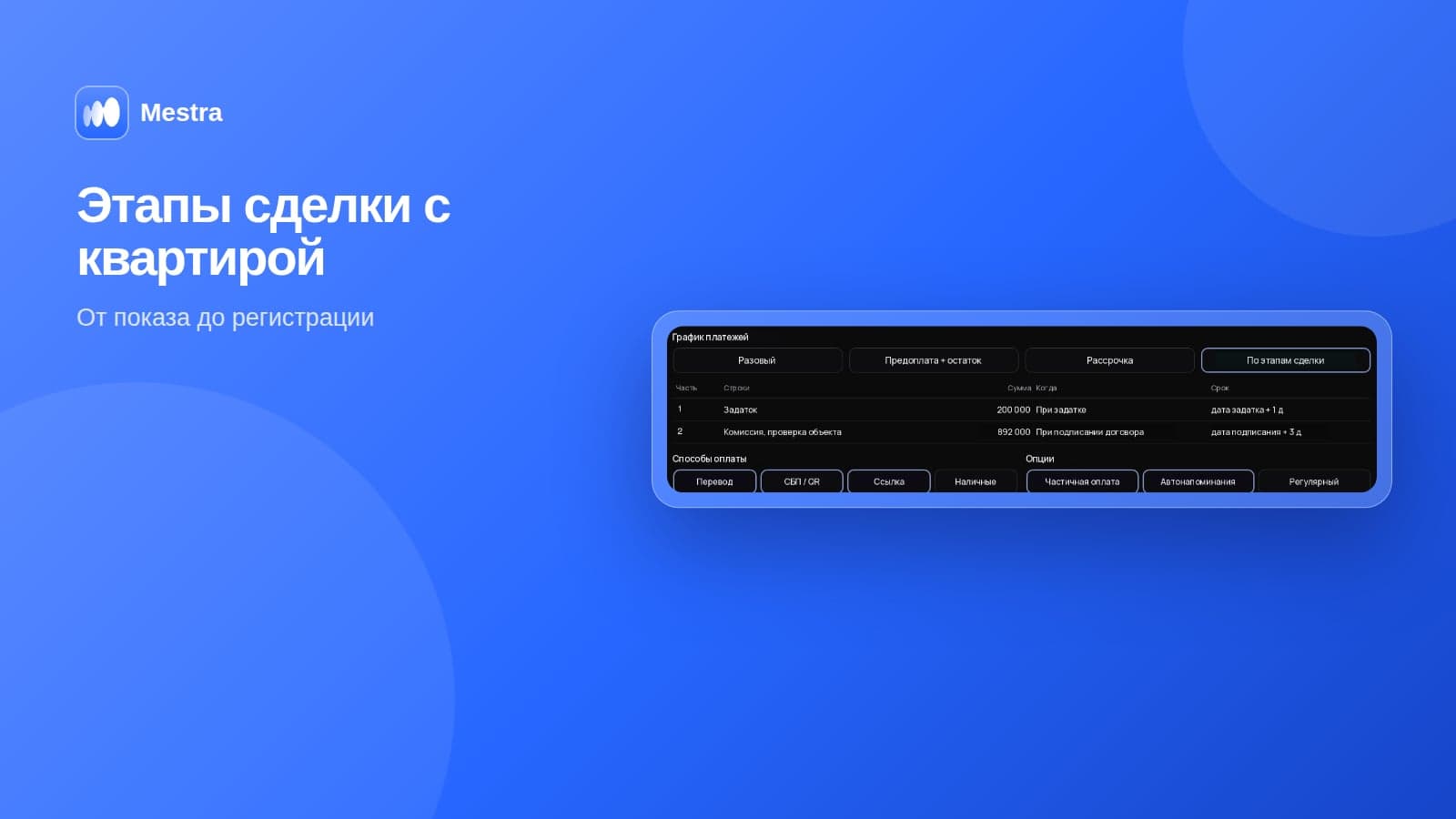
- Payment schedule. One-off payment, prepayment, instalments or by deal stage.
- Preview before issuing. You can see what will be printed on the invoice and what stays internal: profit and commissions.
- Partial payment. A payment is automatically allocated across lines.
- Status by actual payment. The invoice changes status when money arrives.
- Branch details. The invoice is issued in the name of the right legal entity.
- Debts and reminders. A Debts tab with days overdue and a "Remind in chat" button.
FAQ
Can you do without an invoice?
Yes, payment can be made under the contract. But with an invoice, the client doesn't have to look up details or calculate the amount — payment arrives faster.
How do you invoice an individual?
Instead of the payer's INN, write their name. For a private person, paying by link or QR code is easier than entering details manually.
What if the company doesn't pay VAT?
Mark the tax line "No VAT" and usually state the grounds on which tax isn't charged.
How do you chase an unpaid invoice?
A rhythm of "a day before the deadline, on the day and three days after" works well. If there's still silence, agree a schedule or send a formal claim.
Bottom line
An invoice gets paid faster when it contains everything needed for payment: details, items with 22% tax, a total, a deadline and a clear schedule. Track partial payments and chase overdue ones on time. In Mestra, invoices, payment schedules, tax and debts are linked to the client card — try it free for 15 days.