Why Revenue Grows but Profit Doesn't: 6 Causes and How to Find Where the Money Goes
Finance3 min read
Revenue is growing but profit isn't: 6 common causes — cost, discounts, ads, team, loss-making products and channels — and how to find the problem.

"We grew by 40%, and there's the same amount in the account as a year ago" is a typical story of a growing company.
Revenue growth by itself doesn't make a business more profitable. Sometimes it makes it less so.
Revenue and profit are different metrics: revenue shows how much money came in from clients; profit shows how much is left after all expenses.
One-minute check
- Compare this year's and last year's profit and loss reports line by line.
- Find the items that grew faster than revenue.
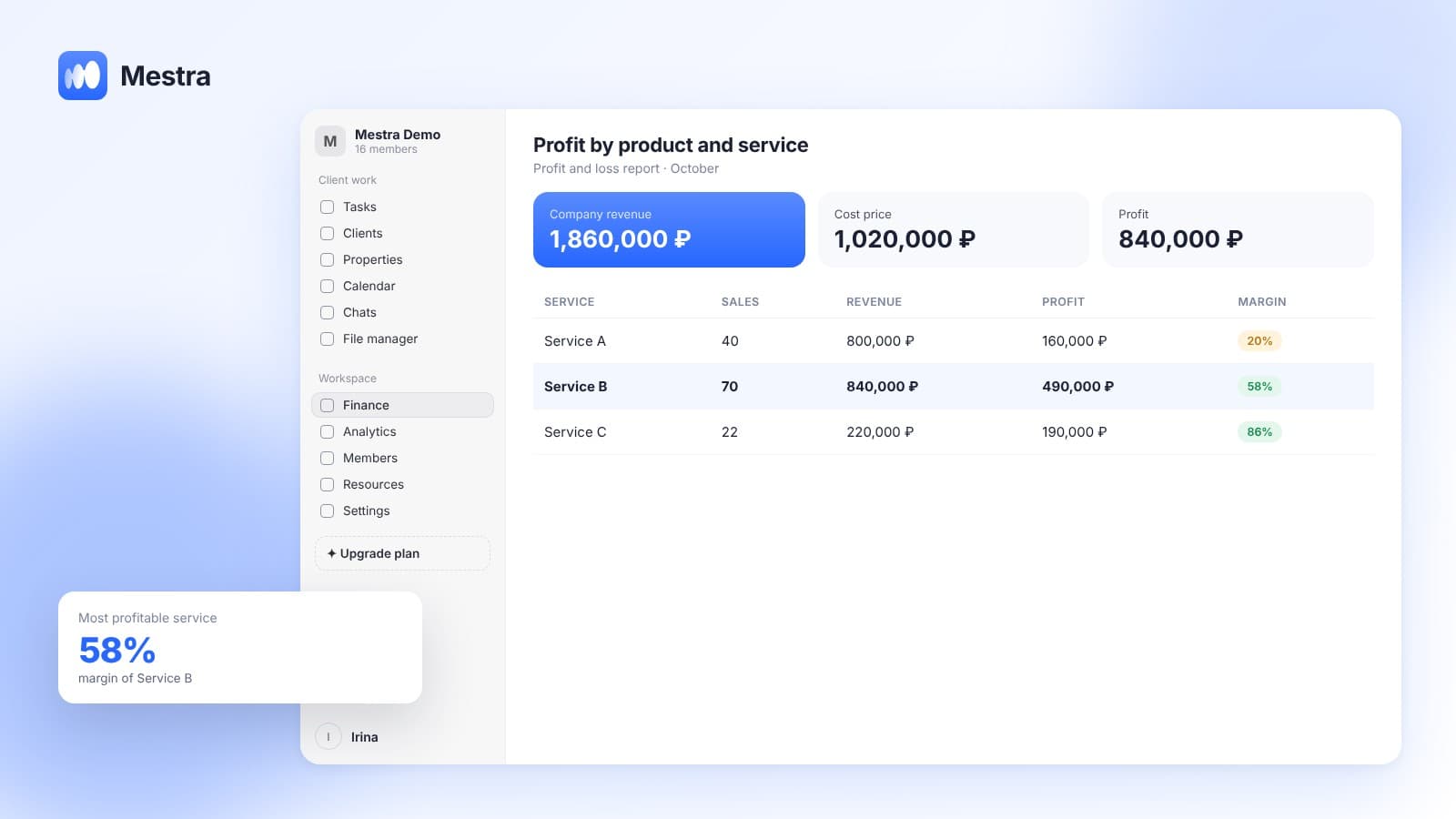
- Look at profit by product and channel.
- Fix one main item, not everything at once.
6 causes
| Cause | How it shows | Where to look |
|---|---|---|
| 1. Cost of sales has risen | Margin falls at the same prices | Full cost |
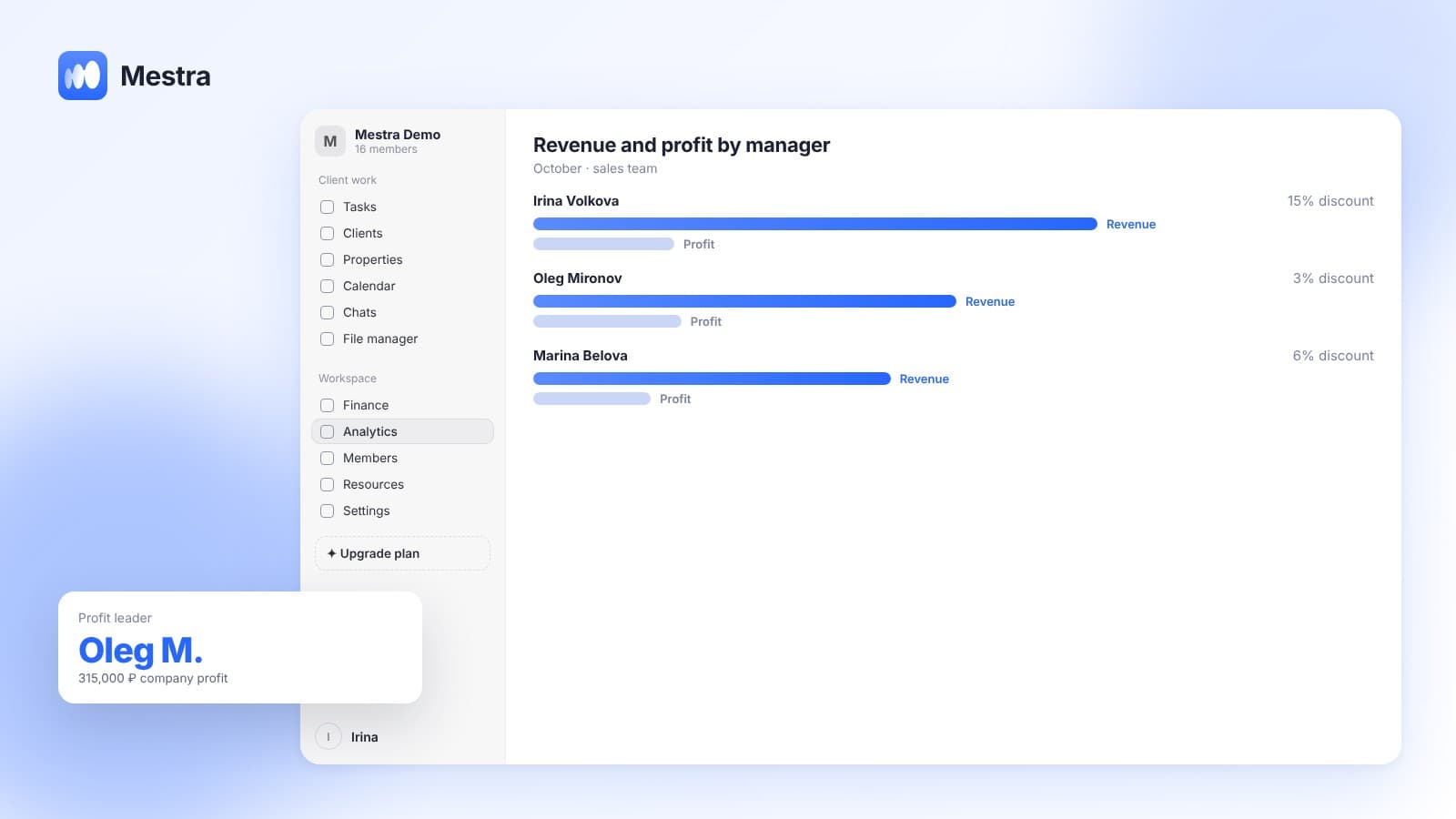
| 2. More discounts | The average bill falls | Discounts by manager |
| 3. Pricier advertising | Cost per client rises | Acquisition cost |
| 4. The team grows faster than sales | Salaries grow faster than revenue | Profit and loss report |
| 5. Loss-making products are growing | A bestseller's sales grow, profit doesn't | Profit by product |
| 6. Unprofitable channels are growing | Marketplace revenue grows, margin falls | Channel profitability |
How to find the cause in an hour
- Compare this year's and last year's profit and loss reports for each line.
- Find the items that grew faster than revenue.
- Look at profit by product: which items drove the growth.
- Check channels: where the new revenue came from and what its margin is.
Example
Revenue grew from 10 to 14 million. Profit stayed at 1.2 million. The analysis showed that all the growth came from a marketplace with a 3% return, while advertising doubled. The fix: raise prices on the marketplace and move part of the budget back to profitable channels.

Revenue growth with falling profitability is a common signal that both the tax authority and banks notice: the Federal Tax Service compares a company's profitability with the industry average, and banks look at the profit trend when lending.
How it works in Mestra
- Profit and loss report and detailed financial reports.
- Expense items in 7 groups: cost of sales, marketing, staff, premises, operations, finance and legal, other.
- Profit on every product after cost and sale expenses.
- Analytics by employee, channel and client source: enquiries, conversion, revenue, response speed.
- Employee commissions are calculated automatically by rule — percentage, fixed amount, per session or per hour — after each invoice is paid; the card shows accrued, paid and outstanding.
FAQ
Is it normal for profit to lag behind revenue?
During rapid growth — temporarily, yes. If it continues for more than two quarters, you need a diagnosis.
Where should you start checking?
With cost of sales and advertising: the problem is most often there.
Will more sales help?
Not if the problem is in costs. More sales with the same model only increase the workload.
Bottom line
If revenue grows but profit doesn't, money is leaking through one or two specific items. You can find them in an hour if your reports are in one system.
Compare the profit and loss report month by month and look at profit by product and channel. In Mestra, this data is available without exports.