Motivating Sales Managers: Pay Schemes, Why Fines Don't Work and What Demotivates More Than the Plan
Sales5 min read
Motivating sales managers: base pay, commission and bonuses, comparing pay schemes, why fines work differently than they seem, and how to cut routine.

A sales manager's motivation has three parts: clear money — base pay and commission; clear rules — what counts as good work; and convenient tools — how much time goes on selling and how much on routine. Fines quickly make people follow rules but rarely increase sales: the manager starts working "for the report" rather than for the client.
Removing routine and making commission transparent is usually more effective than any fine.
What a manager's motivation is made of
- Money. Most often base pay plus a commission on sales. Base pay gives stability, commission gives a reason to close deals.
- Clear rules. The manager understands what earns them more: revenue, number of deals, winning back clients.
- Working conditions. How much time goes on selling and how much on transferring conversations, reports and searching for where the client wrote. This point is the one most often underestimated.
Popular pay schemes
| Scheme | Pros | Cons |
|---|---|---|
| Base pay only | Stability, low turnover | No incentive to sell more |
| Commission only | A strong incentive to close deals | High turnover, pressure on clients |
| Base + commission | A balance of stability and incentive | The right proportion has to be found |
| Base + commission + plan bonus | Motivates growth | Only works if the plan is realistic |
| Base + KPI bonus | Takes quality into account, not just revenue | Needs a transparent calculation system |
For most teams, base pay plus commission works: the manager isn't afraid of an "empty" month but is interested in results. How to build a realistic plan — in our article the sales plan; how to calculate a metrics-based bonus — in our article sales manager KPIs.
Fines: why they don't work the way they seem to
Fines for an unfilled CRM, missed calls or a missed plan work at first: cards get filled in, reports get submitted. But there's a downside:
- Data "for the report". The card says "spoke, thinking about it". Formally there's a record, but it's useless.
- Time goes to the wrong place. If transferring conversations from five apps takes an hour a day, a fine makes people spend it, but doesn't increase sales.
- The best leave first. Strong managers don't like working under constant threat.
A fine treats the symptom. The cause is that doing the job properly is inconvenient.
What demotivates more than any plan
- Ten apps instead of one workplace.
- Manually transferring conversations into the CRM in the evening.
- Reports that nobody reads.
- An opaque commission calculation: "we'll work it out at the end of the month".
- Clients "taken" by colleagues because it's unclear who owns the deal.
Non-financial motivation
- Recognition: reviewing successful deals at a team meeting.
- Growth: a clear path from manager to senior manager to team lead.
- Learning: reviewing the best employees' conversations, handling objections. The method is in our article handling objections.
- Autonomy: less micromanagement, more trust in results.
How to build motivation without pressure
- Make commission transparent. The manager sees their deals and the amount in real time.
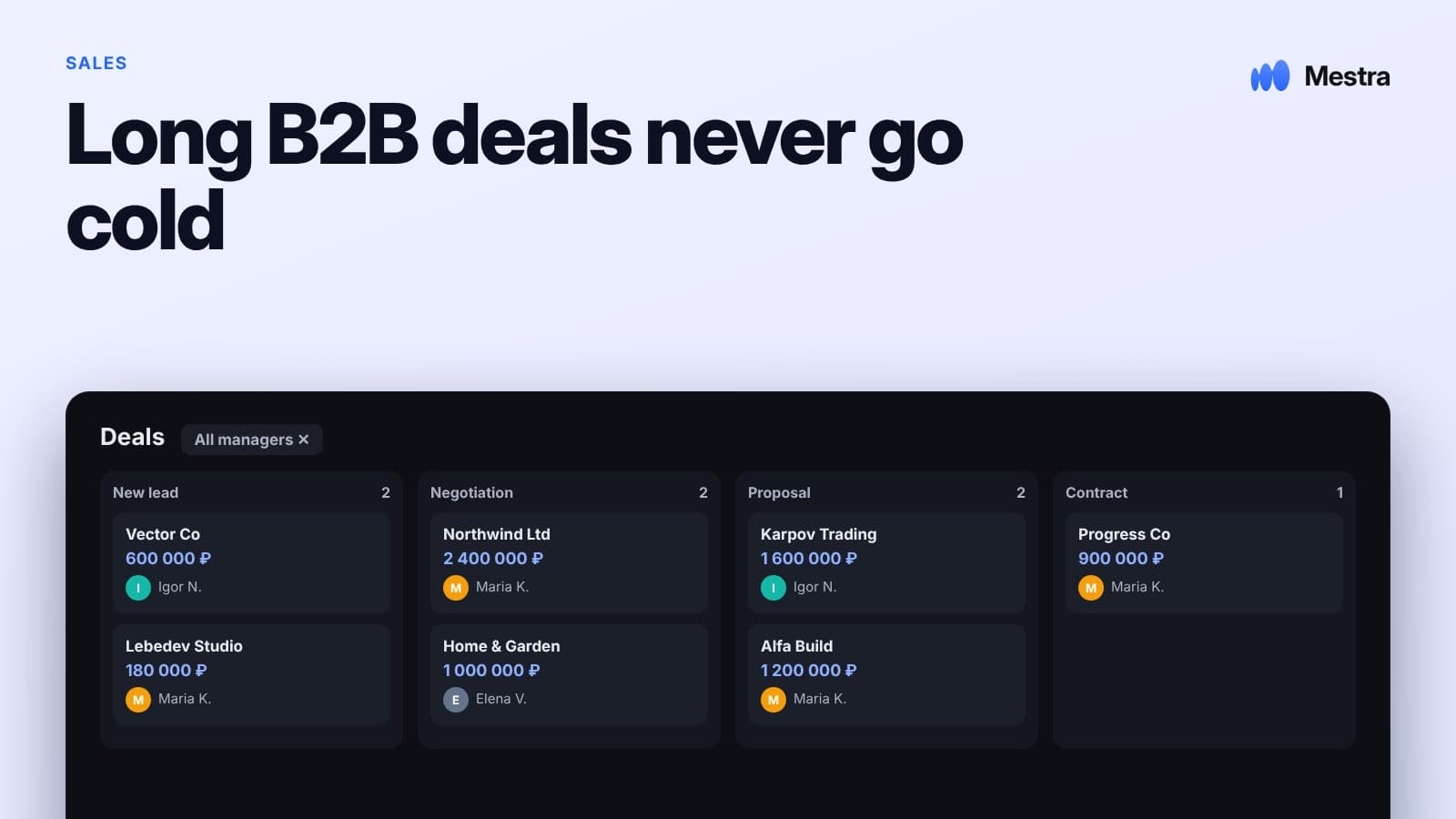
- Assign clients. Every enquiry has an owner — no arguments over "whose client".
- Remove routine. Conversations, cards and reminders are the system's job, not a person's.
- Praise publicly.
- Look at the numbers together. Conversion and workload are a way to find where to help, not a reason to punish.
How to look at the team's work without micromanagement — in our article how to manage sales managers.
How it works in Mestra
Mestra is our product. We built it so that doing the job properly is the most convenient option:
- All messengers and classified sites in one window. The manager doesn't jump between apps.
- The AI assistant takes on routine: it replies to clients, books meetings and suggests what to save in the card.
- Every client has an owner — no double replies or arguments.
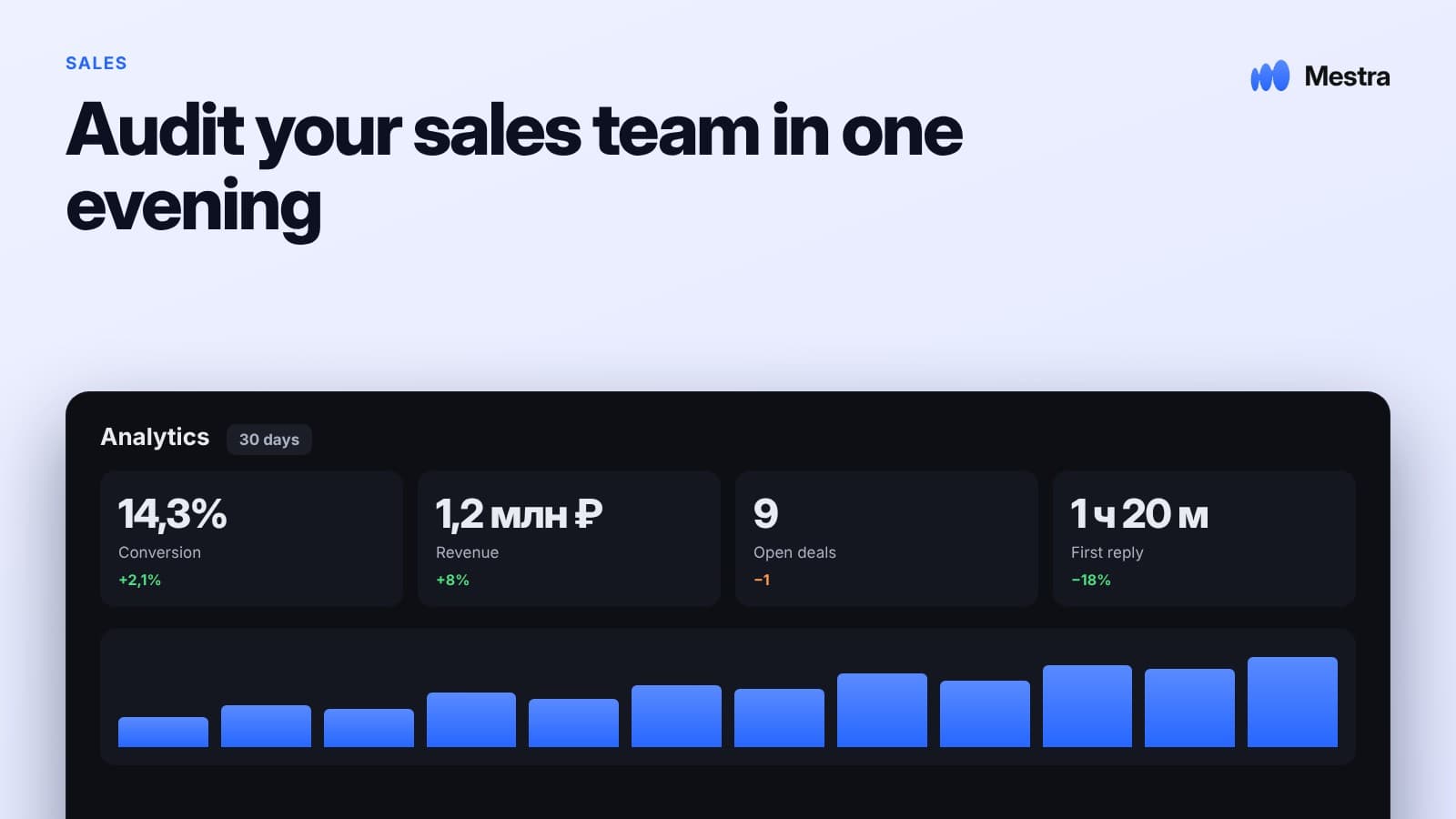
- Each employee's conversion is visible in analytics without manual reports.
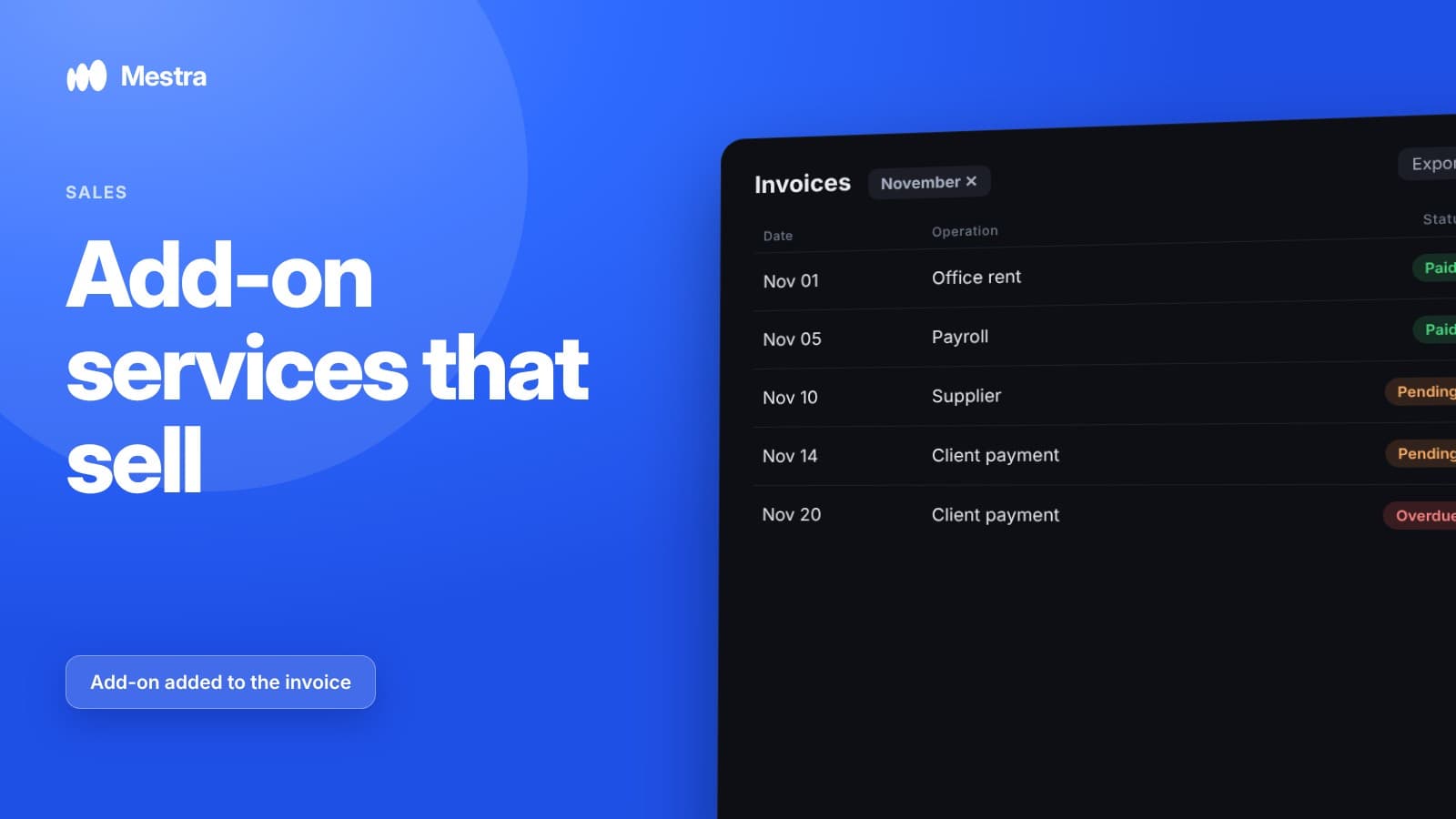
- Payments for deals are recorded in the system — calculating commission is easier.
- Roles and permissions for teams of any size.

FAQ
What motivation works best for sales managers?
Base pay plus a commission on sales, with transparent calculation rules. It's just as important that the work itself is convenient.
Should you fine managers?
Fines give a quick but superficial effect. It's better to remove the reasons doing the job properly is inconvenient.
How do you motivate managers to fill in the CRM?
Make it so there's almost nothing to fill in: conversations land in the card by themselves, and AI suggests what to save.
What commission should you pay a sales manager?
It depends on the industry and margins. The key is that managers can calculate their own income.
Bottom line
Motivation isn't just money, and it isn't fines — it's clear rules and a workplace where selling is easier than doing routine.
When the system takes on the extra work, managers have both the time and the desire to sell. Try Mestra free for 15 days.