The Client Card in a CRM: Required Fields, Work History and Examples by Industry
Guides4 min read
What a CRM client card should contain: contacts, source, conversations, deals, invoices, industry-specific history and the next step. Field examples by industry.

A client card in a CRM is a single page that shows who the client is, where they came from, what you've discussed, what they bought, what they owe and what the next step is. If answering these questions means opening a messenger, a spreadsheet and an accounting program, you don't have a card — you have scattered data.
Below: the fields every card needs, which to add for your industry, and how not to turn the card into a 50-field questionnaire.
One-minute check
- Open any client's card.
- Find the source: where they came from.
- Find the latest conversation and the latest visit or deal.
- Check that there's a responsible person and a dated next step.
- See whether unpaid invoices are visible.
If even one item is missing, the client is at risk of "getting lost".
Required card fields
| Field | Why |
|---|---|
| Name and phone | To contact the client |
| Messengers | To write where the client actually replies |
| Source | To see which channels bring clients |
| Responsible person | Who manages the client |
| Next step | What to do and when |
| Conversations | What was promised and agreed |
| Deals and invoices | What they bought and what's unpaid |
| Mailing consent | Whether offers can be sent |
Fields for different industries
| Industry | Additional fields |
|---|---|
| Real estate | Client type (buyer, seller, tenant, owner, investor), budget, mortgage: bank, approved amount, down payment, chain deal |
| Clinic | Date of last visit, attending doctor, course of treatment |
| Beauty salon | Favourite stylist, preferences, date of next touch-up |
| Car service | Vehicle, mileage, date of next service |
Industry-specific client history
A plain "call — email — call" feed doesn't show where the client is in the process. A history built from industry events is more useful. In real estate that's viewing, price offer, deposit, deal — all records grouped under the deal. After every viewing, it's worth asking "How did it go?" and recording the outcome in one tap: liked it, needs to think, not a fit.
Example: why the next step matters more than fields
An agency manages 300 active clients. 90 of them have no next step. If just 10% of those 90 would have bought after a timely call, and the average commission is 180,000 ₽, the agency is losing 9 deals and 1,620,000 ₽.
Related reading: client tracking, client base, CRM for real estate, how to work in a CRM, client connections, how AI fills in the client card from the chat.
How it works in Mestra

Client conversations from every channel
Mestra is a CRM system: clients, messengers and marketplaces, tasks, finance, analytics and an AI operator in one window.
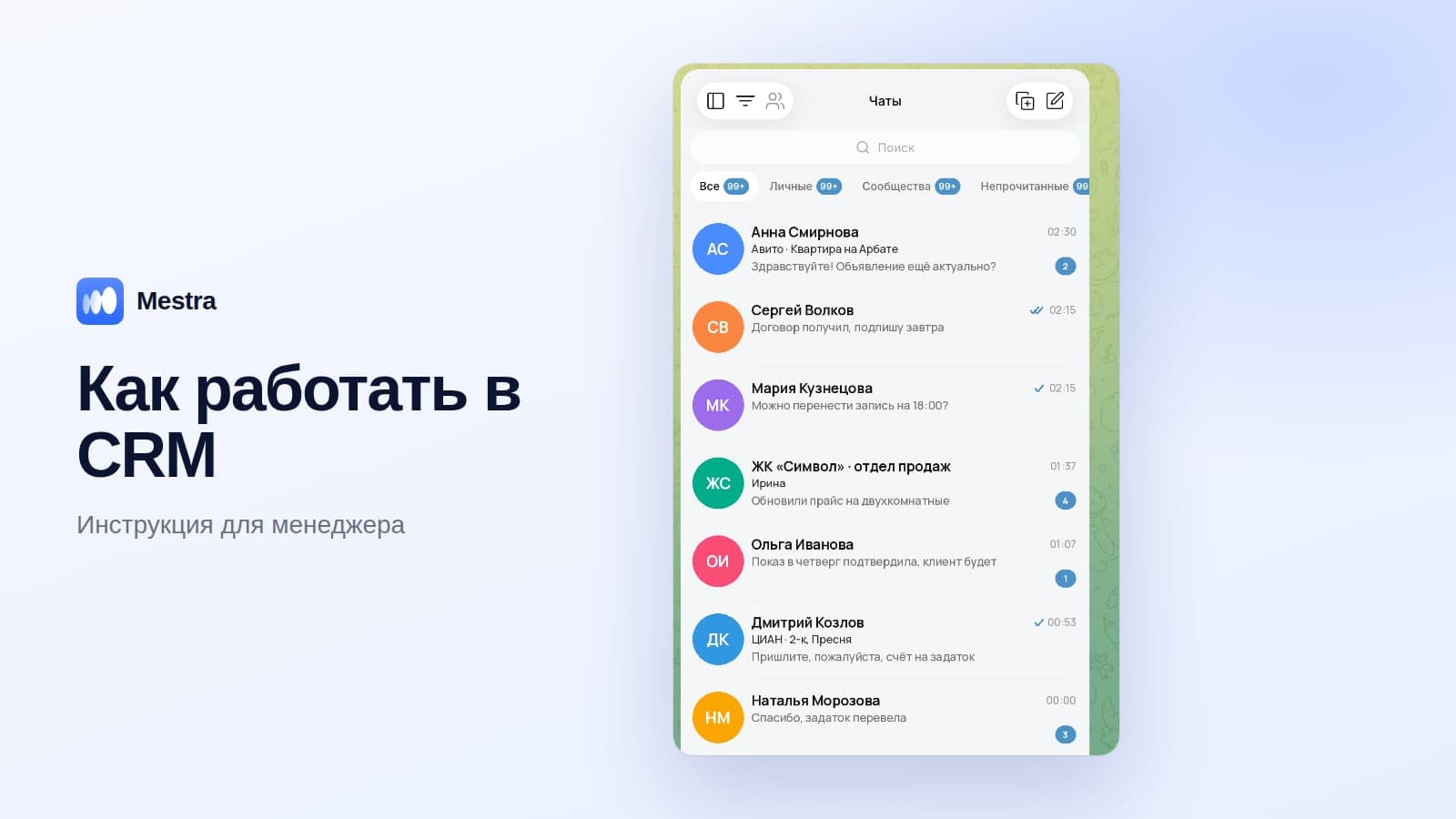
- All conversations in the card. MAX, Telegram, VKontakte, Avito, CIAN and other channels in one client feed.
- Industry-specific history. In real estate, for example, viewings, offers, the deposit and the deal are grouped under the deal and linked to tasks.
- "How did it go?" after a viewing. The outcome is recorded in one tap, and the system suggests the next step.
- Real estate fields. Client type, source (Avito, CIAN, Yandex Real Estate, Domclick), mortgage and chain deal.
- Matching properties. A tab of properties that fit the client's budget and wishes, with sending to the chat.
- Invoices and debts. The client's invoices, payments and outstanding balance are visible in the card.
- Reminders. Birthday, contract end, repeat visit — Mestra drafts the message text.
FAQ
How many fields should a client card have?
As many as managers actually fill in. Usually 8–12 required ones plus a few industry fields.
Should every call be recorded in the card?
What matters are agreements and the next step. Messenger conversations are saved automatically.
Who should be able to see the client card?
The responsible person, their manager and anyone who needs it for their role. Permissions are configured for each role.
How is a client card different from a deal?
The card is about a person or company; a deal is about a specific purchase. One client can have several deals.
Bottom line
A client card should answer "who, where from, what was agreed, what was bought, what's next" without switching to other programs. Keep the required fields, add industry ones and never leave a client without a next step. In Mestra, conversations, history, invoices and reminders are gathered in the client card — try it free for 15 days.