Client Retention: How to Measure Churn and Notice in Time That a Client Is Leaving
Clients4 min read
Client retention in practice: how to calculate the retention rate and churn, which signs show a client is leaving, and how a CRM warns you about it in advance.

Client retention is everything a company does to make a client come back again. It starts not with promotions and discounts but with the ability to notice in time that a client has started to leave — while a simple message can still bring them back.
Churn is rarely sudden. A client who used to come once a month skips a visit, then a second. A buyer who used to write at length starts replying in one word. These signals are visible, but only if someone is looking at them.
How to calculate retention and churn
| Metric | Formula | What it shows |
|---|---|---|
| Retention rate | (clients at end of period − new in period) ÷ clients at start × 100% | The share of clients who stayed |
| Churn | 100% − retention rate | The share of clients who left |
| Share of repeat buyers | Bought more than once ÷ all clients × 100% | How much clients come back |
One-minute calculation: at the start of the quarter you have 200 clients, 50 new ones arrive during the quarter, and 210 are active at the end. Retention: (210 − 50) ÷ 200 × 100% = 80%. Churn is 20%, or 40 clients.
Signs that a client is leaving
- A longer pause than usual. A client with a regular cycle didn't come back on time.
- Lower activity. Writes less often, replies more briefly, takes longer to decide.
- Dissatisfaction in the conversation. A complaint, irritation, a mention of a competitor.
- A change of contact person. The manager the client was used to working with has left.
- An unresolved problem. A promise that wasn't kept on time.
Client retention methods
- Watch the cycle. For each client it should be clear when they're due back, with a signal if they don't return.
- React to dissatisfaction immediately. An irritated client who gets an answer the same day often becomes more loyal than before.
- Keep promises with the system. "We'll call you back on Wednesday" should be a task, not something in the manager's memory.
- Don't lose history when staff change. Conversations and agreements belong to the company.
- Offer the next step rather than a general discount: a renewal, a repeat service, an add-on to the purchase.
Why churn is noticed late
The owner sees the month's revenue but not who specifically stopped buying. A manager sees their active clients but not the ones who quietly disappeared. Churn ends up nowhere — until revenue drops.
The solution is for the system to flag clients showing signs of leaving and show them to the owner as a list, rather than as a total figure a quarter later.
How it works in Mestra
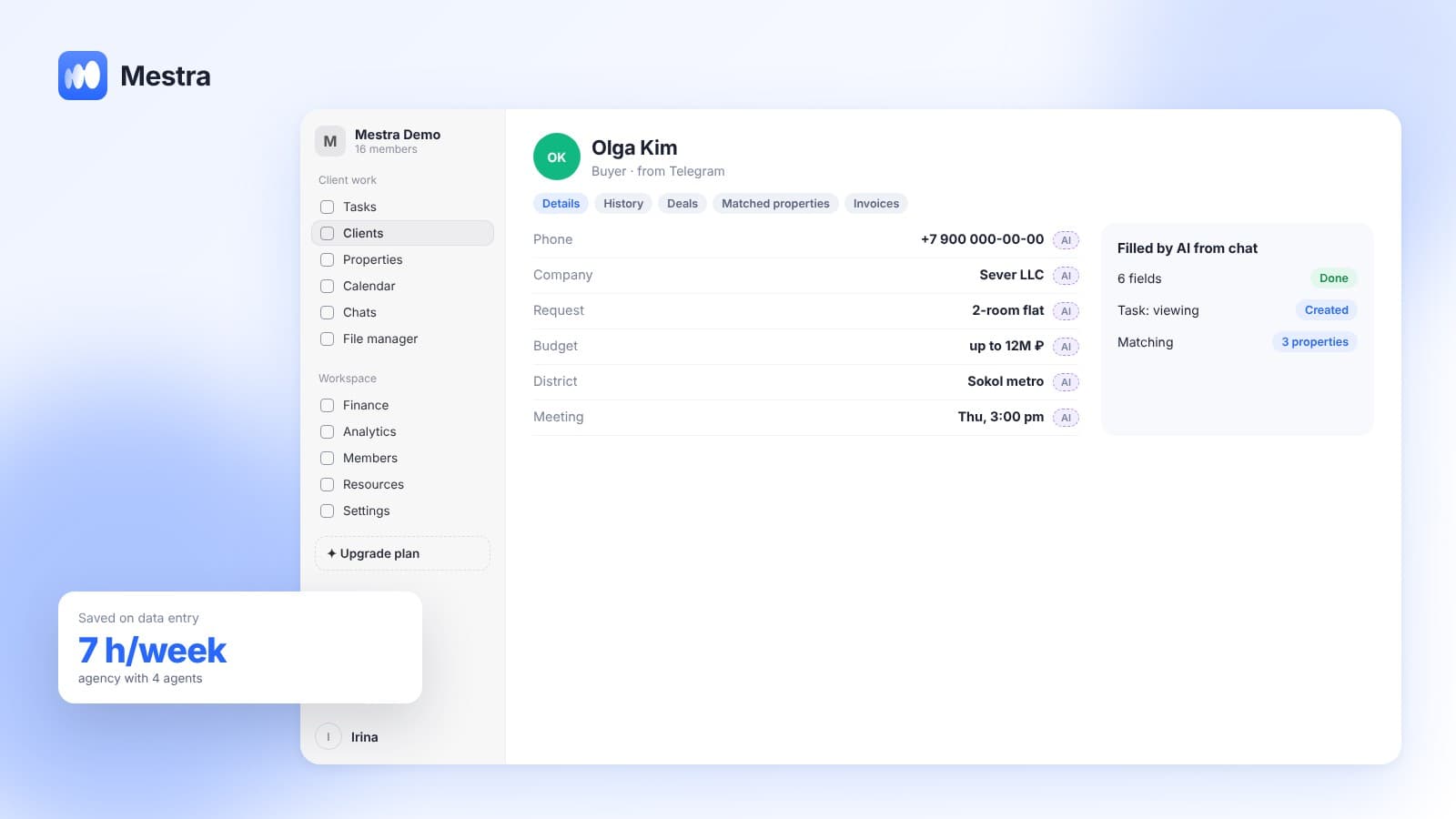
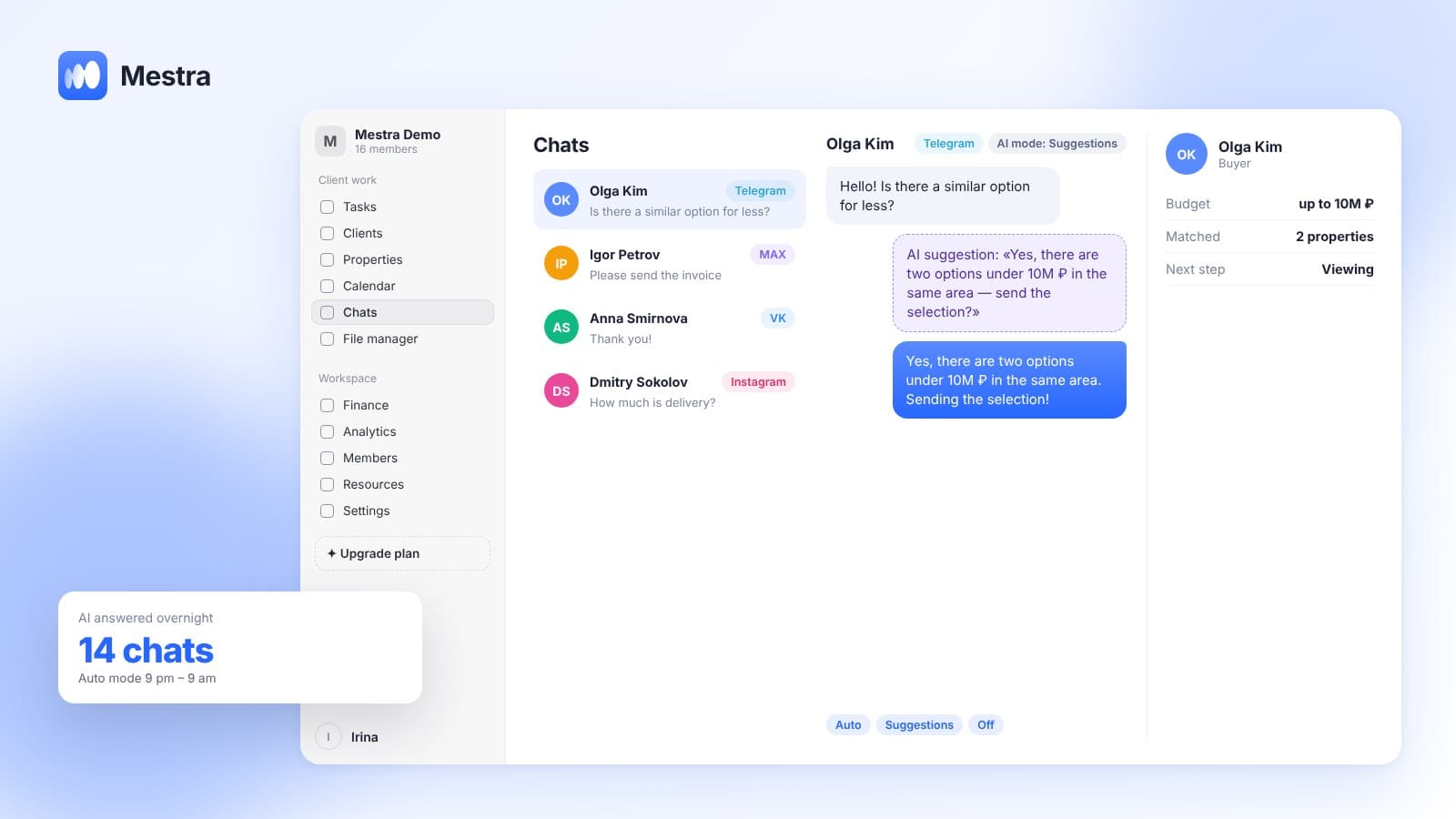
Mestra flags clients who haven't come back for a long time and prepares a message to win them back. AI analyses conversations, tells the owner about an unhappy client and suggests the manager's next step. Agreements from chats become tasks with deadlines, and the client's whole history stays with the company when staff change.
Why a CRM should work with the client base itself — in our article CRM with AI. Ready win-back scenarios — in how to win back a client.

Related reading: predicting client churn.
FAQ
What is client retention?
The company's actions that help clients come back for repeat purchases instead of leaving for competitors.
How do you calculate client churn?
Subtract the retention rate from 100%. For example, with 80% retention, churn is 20%.
What churn rate is normal?
It depends on the industry and the purchase cycle. The trend matters more: is churn growing from period to period?
Can you predict that a client will leave?
Yes, from the signals: a pause longer than the usual cycle, lower activity, dissatisfaction in the conversation. The system can flag such clients automatically.
Bottom line
Keeping a client is easier than finding a new one — if you notice them leaving in time. Mestra shows you who has started to leave while they can still be won back. Try it free for 15 days, no card required.