Employment Contract With an Employee: Mandatory Terms, Template and Hiring Process
Team6 min read
How to draw up an employment contract in Russia in 2026: mandatory terms under Article 57 of the Labour Code, a structure template, probation, deadlines and mistakes.

The employment contract is the key document between a company and an employee: it sets the role, place, pay and schedule. The list of mandatory clauses is set by Article 57 of the Labour Code, and if even one is missing, the document must be supplemented and the employer risks a fine.
The example we'll use throughout
The Lisa coffee shop in Nizhny Novgorod is hiring a barista, Denis. He starts on 1 December, works shifts, his salary is 48,000 ₽, and the first three months are probation. Let's see what the coffee shop owner needs to write, sign and send.
What must be in the text
| Clause | How it looks for Denis |
|---|---|
| Place of work | Lisa LLC, the coffee shop on Rozhdestvenskaya St, Nizhny Novgorod |
| Job function | Barista — per the staffing table |
| Start date | 01.12.2026 |
| Term | Open-ended. A fixed-term contract needs a term and a reason |
| Pay | Salary 48,000 ₽, bonus per the policy, pay days |
| Schedule | 2-on-2-off shifts — since it differs from the standard |
| Compensation for harmful conditions | Not needed — conditions are acceptable |
| Nature of work | Not travelling, the clause is omitted |
| Working conditions | The class from the workplace assessment |
| Social insurance | A statement that the employee is insured |
If a clause is forgotten, the contract still applies. The missing condition is added by a separate supplementary agreement.
What you can add if you wish
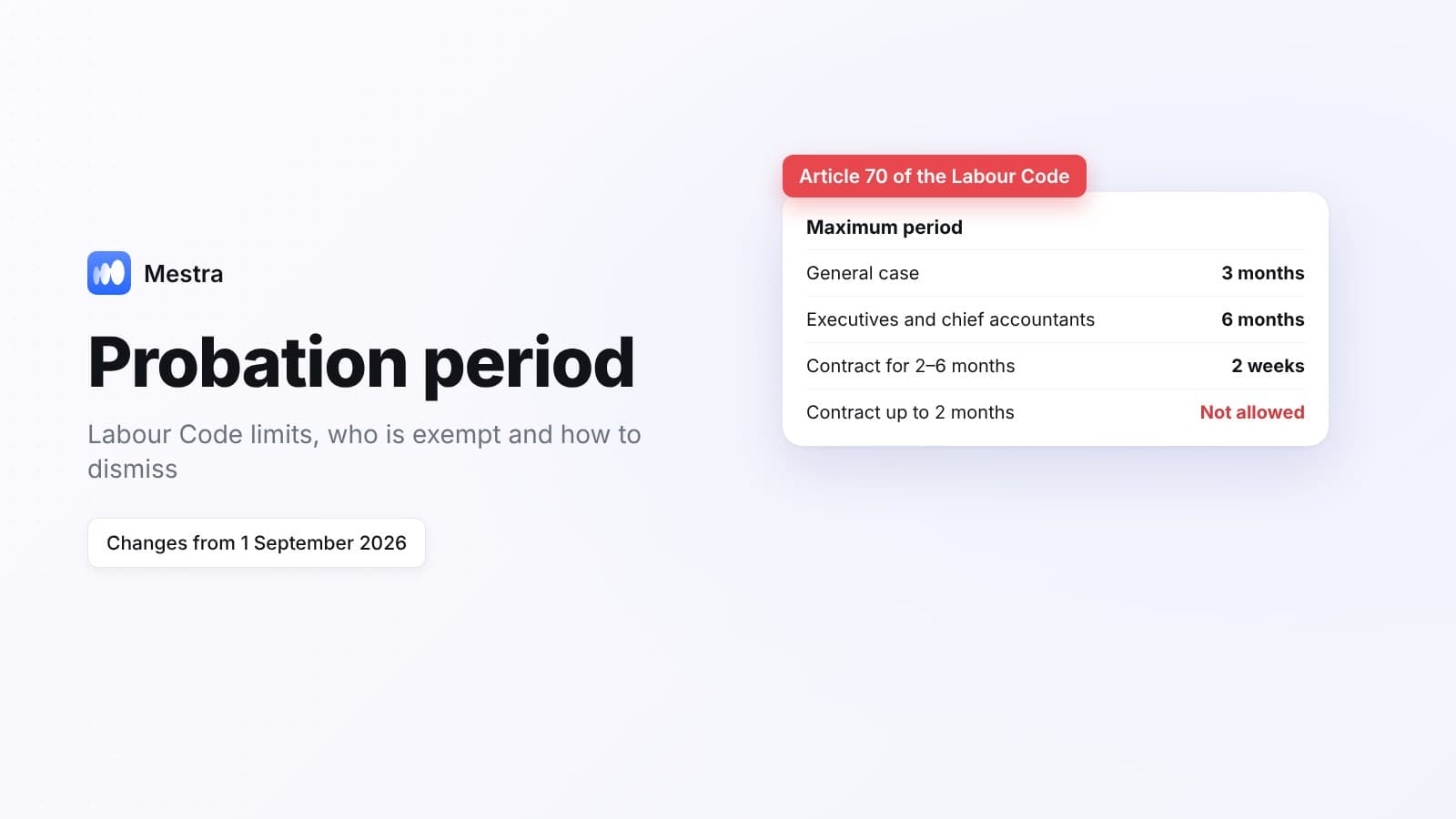
- Probation — three months for Denis. Rules and limits in probation period.
- An obligation not to disclose recipes and supplier data.
- A remote or hybrid format.
- Training at the coffee shop's expense with a condition to stay on.
- Full financial liability — as a separate document and only for roles on the official list.
The document's framework
Employment Contract No. 7 Nizhny Novgorod, 28.11.2026
1. Parties. Lisa LLC, represented by its director …, and citizen … (the employee).
2. Work. Position — barista. Place — the coffee shop at … Start — 01.12.2026. Term not limited.
3. Probation. Three months.
4. Pay. Salary 48,000 ₽. Bonus — per the Bonus Policy. Payments on the 10th and 25th.
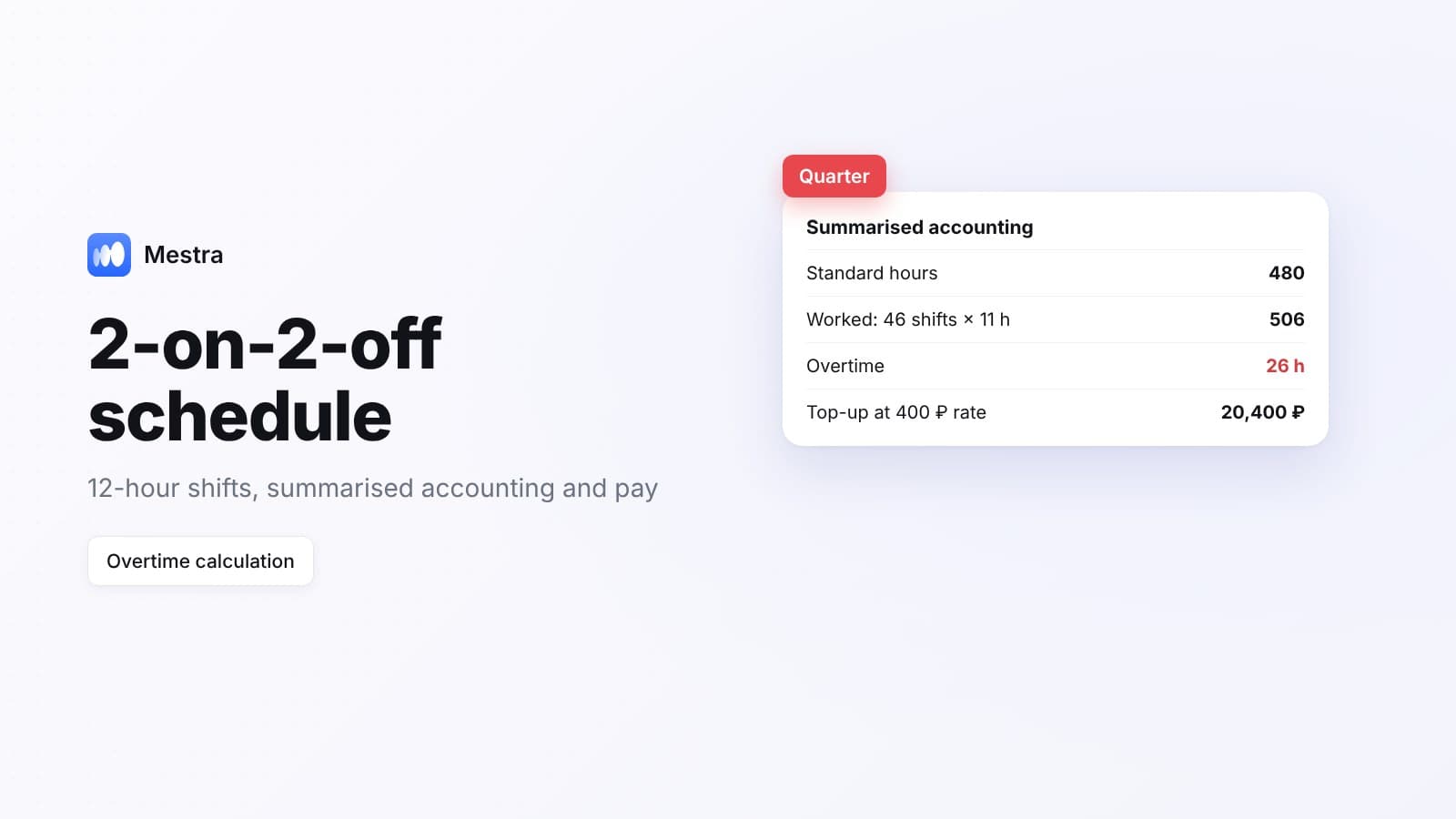
5. Hours. 12-hour shifts on a 2-on-2-off schedule, summarised accounting with a quarterly reference period.
6. Leave. 28 calendar days a year.
7. Working conditions. Workplace assessment class — acceptable.
8. Rights and duties. Per the Labour Code of the Russian Federation and the job description.
9. Insurance. The employee is subject to compulsory social insurance.
10. Other. Two copies of equal force.
Signatures. The employee's note confirming receipt of their copy.
This is a framework, not a template for every case: adapt it to your role and internal documents.
The sequence on the first day
- Denis reads and signs the internal work rules, the pay policy and the job description — before signing the contract, not after.
- The parties sign two copies. On the coffee shop's copy, Denis writes that he has received his.
- The director signs the hiring order; a copy is given if Denis asks.
- The HR officer sends the EFS-1 form to the Social Fund no later than the next working day.
- If Denis has a paper employment record book, an entry is made in it.
- A personal file is opened for Denis and he's added to the timesheet — how to track shifts is covered in the timesheet.
Can it be done without paper?
Yes. Since 2022 the contract may be signed electronically if the company has electronic HR document management and the employee has agreed to it. A paper copy is issued at the employee's request.
One-minute calculation: what "we'll sort the paperwork later" costs
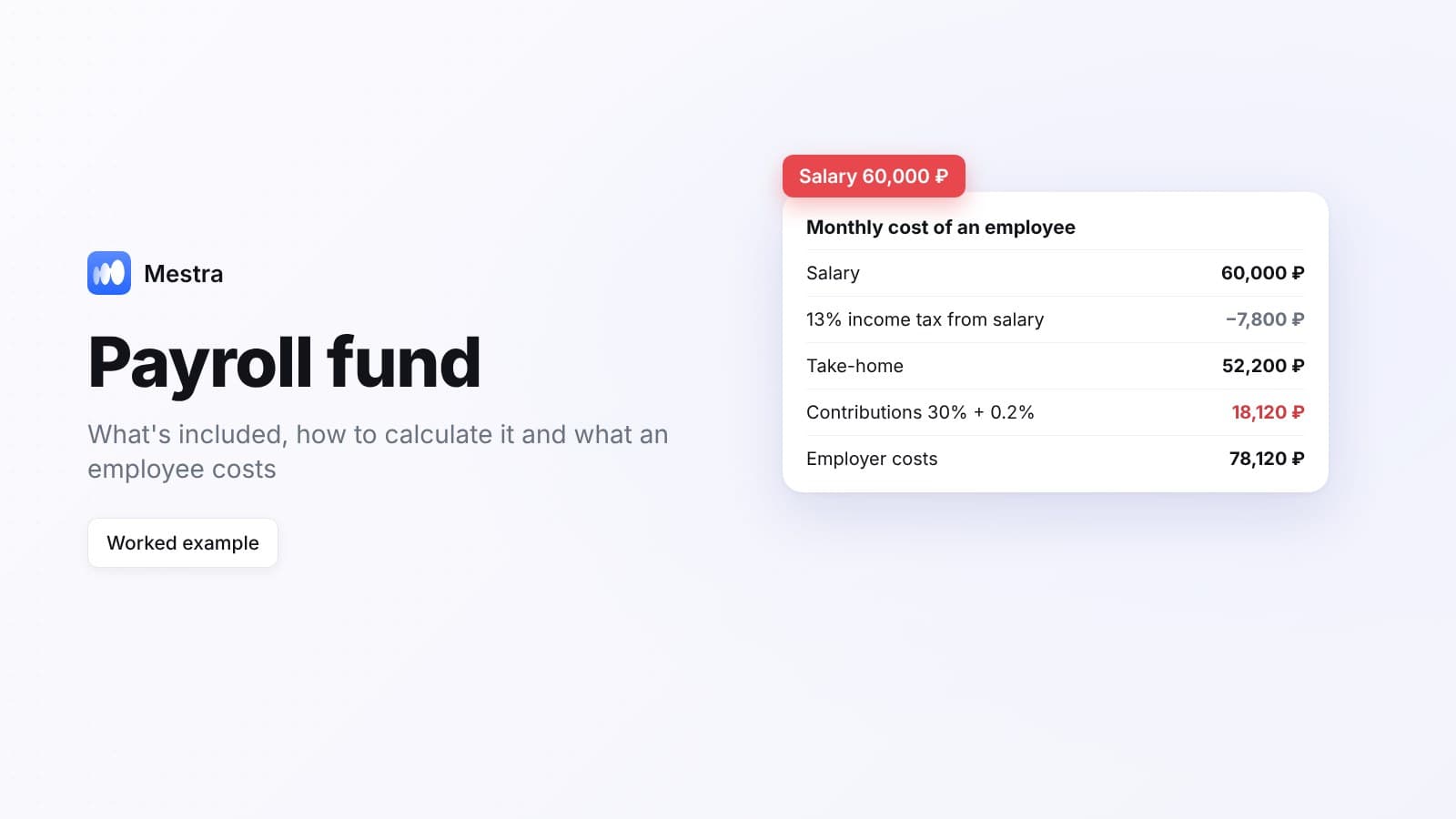
Say Denis works for three months without a contract and then leaves on bad terms. Besides an administrative fine under Article 5.27 of the Code of Administrative Offences, he can go to court to have the relationship recognised as employment and receive pay at the market rate, holiday pay and compensation. The coffee shop would also have to pay additional income tax and contributions: at a 48,000 ₽ salary that's about 14,500 ₽ of contributions per month on top.
Where people most often go wrong
- Writing "salary by agreement" instead of a specific amount.
- Putting probation in the order but not in the contract.
- Signing a fixed-term contract where the work is permanent.
- Introducing the rules retroactively.
- Setting a salary below the minimum wage — 27,093 ₽ in 2026 for a full-time position.
How it works in Mestra
In Mestra each employee has a profile: employment data, schedule, branch, licences and documents. Scans of the contract and order are stored there too, and the plan for the first weeks is easy to set up as tasks with a mentor. The role determines which sections the new hire sees.

- Shift schedule and a place in the team calendar.
- Onboarding tasks with an owner.
- Role-based access from day one.
FAQ
How many copies should be signed?
Two: one for each party. On the employer's copy, the employee confirms they've received theirs.
Can a sole trader hire on an employment contract?
Yes, a sole trader who is an employer hires staff the same way as an organisation.
Does the contract need to be registered anywhere?
No. It's enough to send the hiring information to the Social Fund.
What if a clause was forgotten?
Sign a supplementary agreement with the missing condition.
Bottom line
A good employment contract is about specifics: address, role, amount, schedule and date, plus the right sequence on the first day and timely notification to the Social Fund. Set out probation and the schedule separately if it's non-standard — like the shift pattern in 2-on-2-off schedule.
Mestra — 15 days free, no bank card required: create an employee profile and a plan for their first weeks.
Sources: Labour Code of the Russian Federation (Arts. 22.1–22.3, 57, 67, 68, 70), Code of Administrative Offences of the Russian Federation (Art. 5.27). This article is not legal advice.