Why a Business Has Too Few Clients and What to Do: 7 Causes the Owner Doesn't See and a 30-Day Plan
Sales6 min read
Why a business has too few clients even though advertising works: 7 internal causes of losses, a 3-question check and a 30-day plan to find and fix the leaks.

Most often, a business has too few clients not because they aren't out there in the market, but because it loses those who have already come.
Requests go unanswered, managers don't take the conversation to a next step, and nobody goes back to past clients.
Before increasing your advertising budget, find out exactly where clients are lost — otherwise new enquiries will be lost in the same way.
A 3-question check: too few clients, or are you losing them?
Answer three questions about last month:
- How many enquiries came in — from messengers, calls, email, classified sites, social media?
- How many got a reply within an hour, while the person was still waiting?
- How many of them became customers?
| Stage | Example | What it shows |
|---|---|---|
| Enquiries | 100 | Advertising works |
| Got a reply | 60 | 40 people lost straight away |
| Reached a meeting | 30 | Half weren't taken to the next step |
| Bought | 14 | The result is 14% |
In this example, the business itself lost more than half of its potential customers.
If you can't answer these questions, that's already the first cause: the losses are there, but you can't see them. How to measure the client's journey — in our article the sales funnel.
7 reasons clients leave
1. You reply too slowly
A client writes to several companies at once. The order goes to whoever replied first and offered a clear next step.
Enquiries are lost especially often at night and at weekends: a request came in on Saturday, and the manager saw it on Monday.
2. Requests get lost between channels
WhatsApp*, Telegram, MAX, Instagram*, email, responses from classified sites — each channel has to be checked separately. A message in one of them is easy to miss, especially when every manager has their own phone.
3. Managers handle conversations poorly
The least visible cause. A manager replied curtly, with no question or offer: "Yes, the flat is available." The client waits for more, doesn't get it and "cools off".
The owner doesn't know, because they can't see the conversation. Ready replies are in our collection of sales scripts.
4. Promised to call back and forgot
"I'll call back on Thursday" — the agreement stayed only in the employee's head. The client didn't get the call and decided they weren't really welcome.
5. Nobody goes back to past clients
Someone who has already bought is the warmest customer, but six months later nobody remembers them.
For example, a real estate agency helped someone rent a flat, and when the lease ended, the tenant went to another agent — simply because nobody wrote to them. How to win such clients back — in our article how to win back a client.
6. Finances are opaque
If income and expenses live in different spreadsheets, it's hard to tell which channel actually brings in money. The business pays for advertising that doesn't work and underfunds the advertising that does.
7. You don't know why deals fall through
A deal fell through — and nobody recorded why. Without reasons for refusal, the same mistakes repeat every month.
What to do: a 30-day plan
| Week | Action | Result |
|---|---|---|
| 1 | Gather all enquiries in one place: date, channel, name, when they were answered | A real picture of the losses |
| 2 | Set a goal: first reply within 15 minutes; agree who replies at night and at weekends | Fewer lost requests |
| 3 | Read the last 20 conversations and agree rules: a question and a next step in every reply | A higher share of meetings |
| 4 | Record the reason for every deal that fell through, and write to clients you haven't spoken to in six months | Clarity on what to fix, and the first returns |
How a CRM helps you see the losses
Keeping this record by hand is hard: spreadsheets get abandoned after a couple of weeks.
A CRM collects enquiries, replies and reasons for refusal automatically.
For example, in Mestra the owner can:
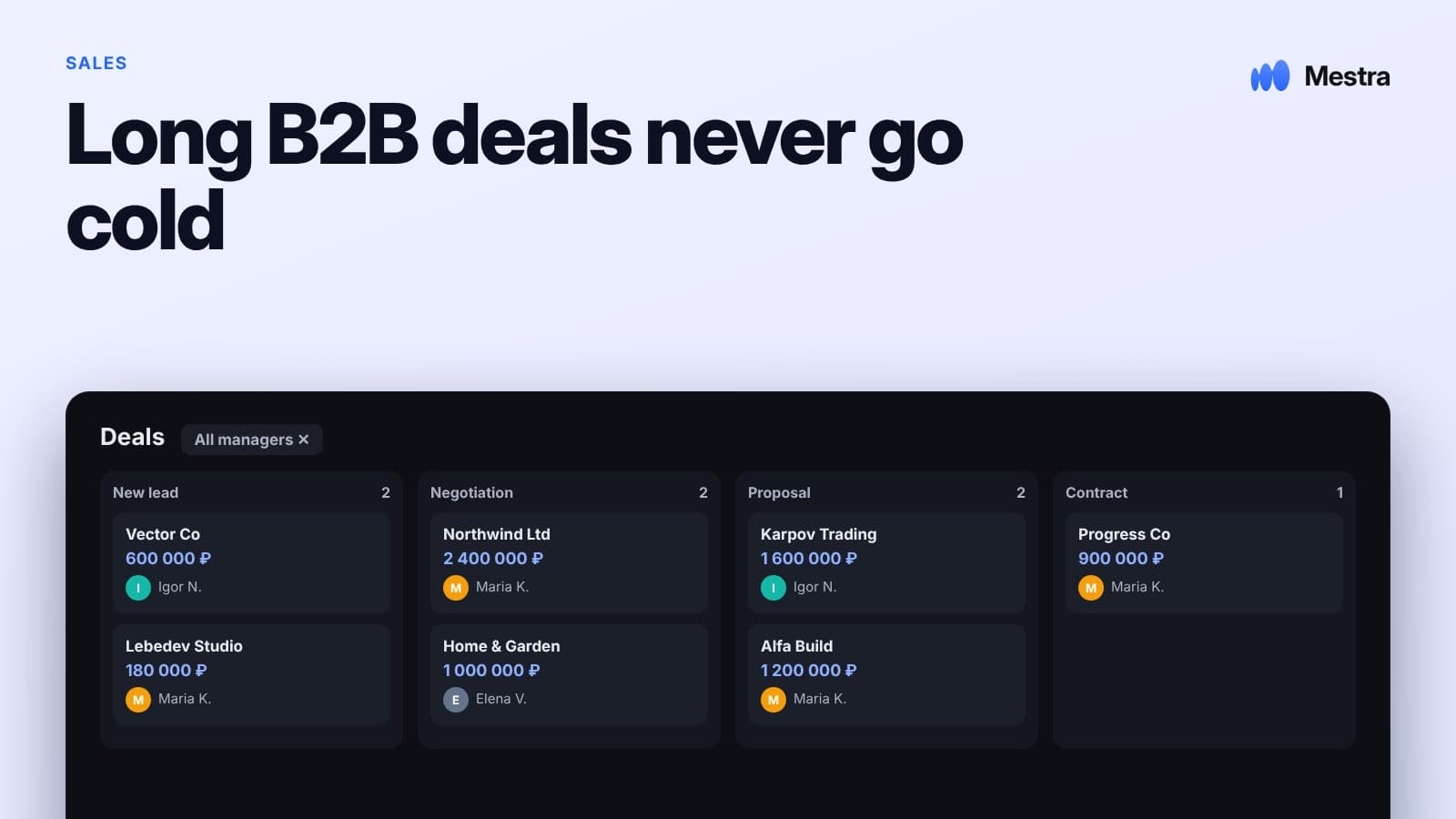
- See all enquiries in one window — WhatsApp, Telegram, MAX, VKontakte, Instagram and responses from Avito and CIAN; every conversation has an owner.
- Read managers' conversations and see where clients "cool off".
- Not lose night-time requests: the AI assistant replies 24/7 and books meetings.
- Know the reason for every lost deal: when a deal is moved to "lost", the system requires a reason.
- Go back to past clients: a filter by date of last contact and tasks for a follow-up.
- See money in the same system: income, expenses, invoices and a profit and loss report.
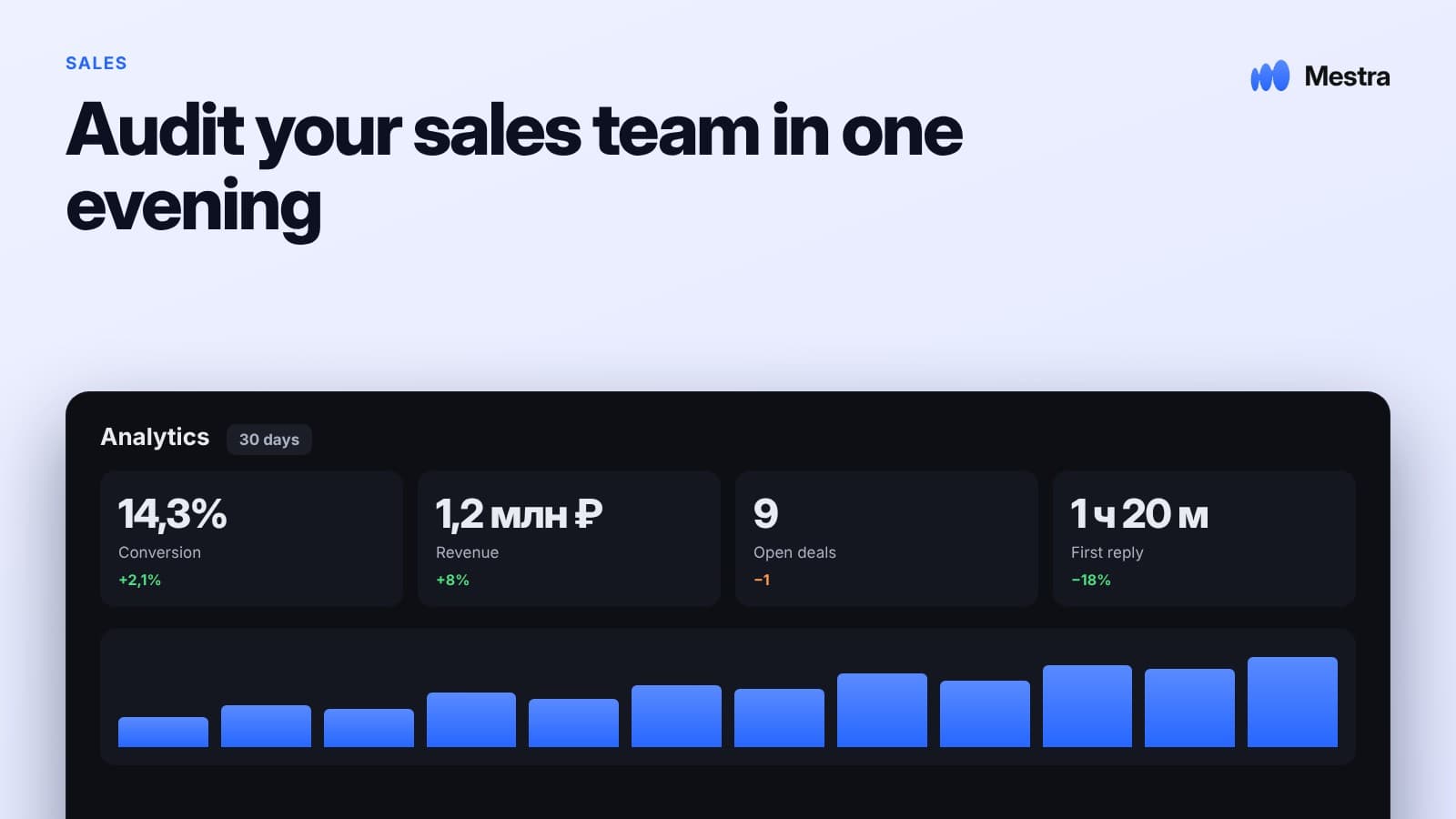
- Compare managers and channels in analytics.

A CRM doesn't replace advertising, but it makes sure every person you attract gets a follow-up. How to choose a system — in our article the best CRM systems of 2026.
FAQ
Why do we have fewer clients?
If market demand hasn't fallen, the cause is most often inside the company: response times have grown, managers have changed, requests get lost between channels.
What if there are no clients at all?
First check whether there really are no enquiries or whether they're going unanswered. If there genuinely are no enquiries, review your advertising and platforms.
Which comes first: advertising or a CRM?
If enquiries are already coming in, first get their handling in order. Otherwise advertising will bring new people who get lost in the same way.
How do you win back past clients?
Make a list of those who bought before, find a reason to write to each one and offer a specific next step.
Bottom line
Too few clients isn't always a market problem. More often it's invisible losses inside the company: slow replies, conversations that "cooled off", forgotten calls and customers nobody went back to.
Find these losses — and growth will start with the clients you already have. Try Mestra free for 15 days, no bank card.
*WhatsApp and Instagram are owned by Meta, which is recognised as extremist and banned in Russia.