Sales Techniques: 9 Methods That Work and When to Use Them
Sales5 min read
Sales techniques with examples: SPIN, AIDA, consultative selling, needs discovery, handling objections, upselling and closing. How to choose and roll them out.

Sales techniques are proven conversation frameworks that help you understand the client's task and offer a solution in a way that leads them to buy. There's no universal technique: the choice depends on the ticket size, the deal length and the channel where the conversation happens.
How to choose a technique
| Situation | What to use |
|---|---|
| High ticket, long cycle, B2B | SPIN, consultative selling |
| Medium ticket, services | Needs discovery, benefit-led presentation, objection handling |
| Quick sales in a messenger | A short reply, a clarifying question, an offer with price and timing |
| Repeat sales | Upselling, cross-selling, repeat-purchase reminders |
| An inbound lead | A fast first reply and a question about the task |
1. SPIN selling
A four-step questioning method:
- Situation: "How many leads do you get a day?"
- Problem: "Do leads ever get lost between messengers?"
- Implication: "How many clients do you lose because of that each month?"
- Need-payoff: "If all your leads were in one window, what would that change?"
Suited to complex sales where the client needs to realise the cost of the problem for themselves.
2. Consultative selling
The salesperson acts as an expert: analyses the task, offers options and says honestly when the product isn't a fit. Works in services, B2B and expensive goods.
3. AIDA
Attention → interest → desire → action. Used most often in texts and messages:
"Your warehouse spends more on lighting than it needs to (attention). New fittings cut consumption by 40% (interest). They pay back in eighteen months and last 10 years (desire). I'll send an estimate for your space — just send me the floor area (action)."
4. Needs discovery
Open questions instead of a presentation: "What are you choosing it for?", "What don't you like about your current solution?", "How will you know you've made the right choice?" The rule: the salesperson talks no more than a third of the time.
5. Benefit-led presentation
Feature → advantage → benefit. Not "we have a 12-month warranty" but "if anything breaks in the first year, we'll replace it free — you won't lose a thing".
6. Handling objections
A four-step pattern: listen → acknowledge the feeling → clarify → answer with a fact.
"Too expensive? I understand, you need to compare. What are you comparing with? … Let's look at what's included in our price and theirs."
7. Closing techniques
| Technique | Example |
|---|---|
| Choice without a choice | "Shall we set it up this week or next?" |
| Summary | "So, you need… we do… the cost is… Shall we start?" |
| Next step | "I'm sending the invoice; paying by Friday locks in the price" |
| Trial period | "Try it for 15 days, then decide" |
8. Upselling and cross-selling
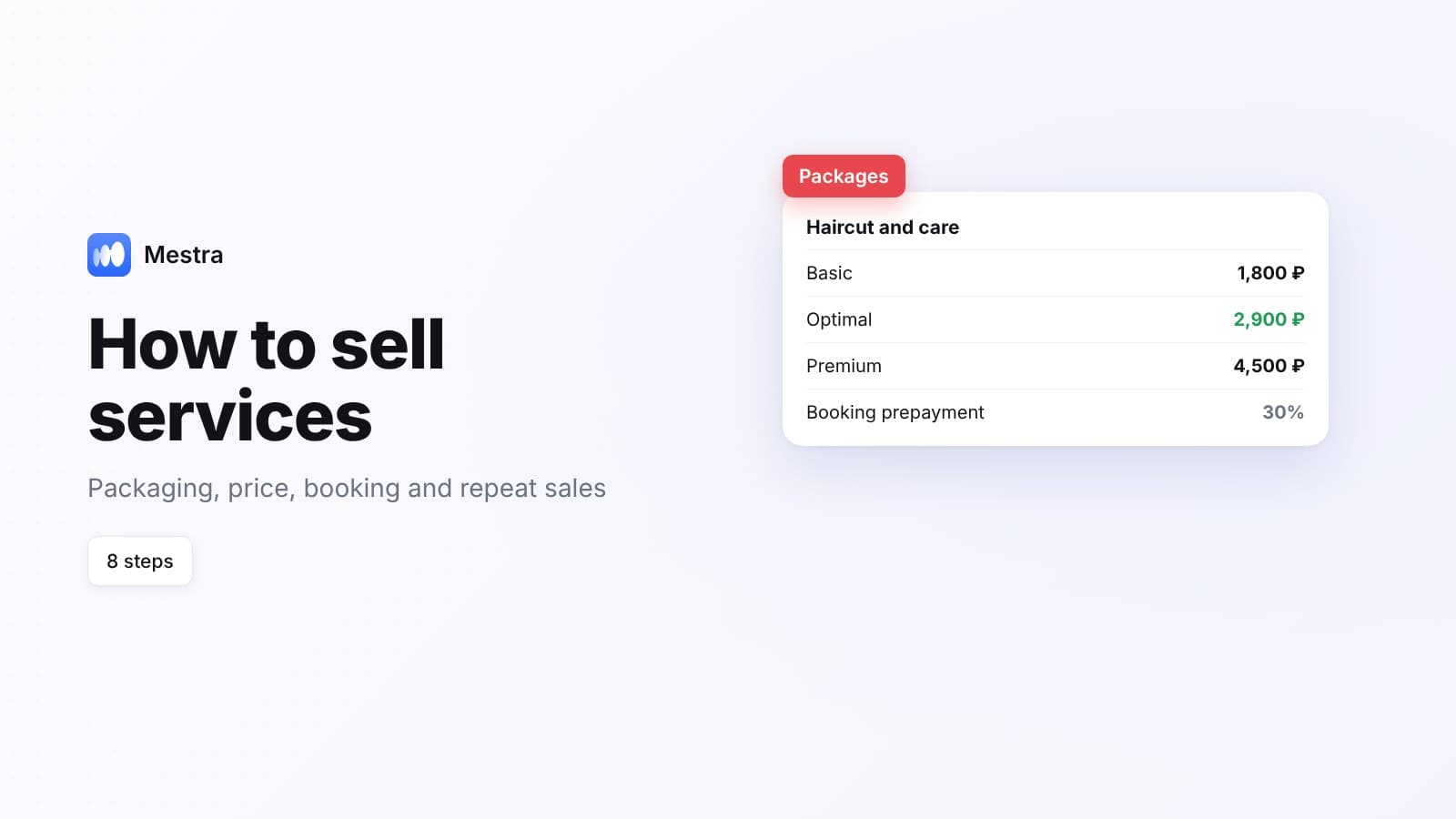
Upselling is a more expensive version: "For your team, the plan with integrations is more convenient." Cross-selling is an add-on: "People often take a storage bag with the throw." Offer it after the client has decided to buy, and only what's genuinely useful.
9. Selling in chat
In messengers, short messages work: answer the question, ask one clarifying question, make an offer with price and timing. Details in sales in messengers.
One-minute calculation: what a technique gives you
A team gets 500 leads a month, conversion is 12% and the average ticket is 9,000 ₽ — revenue 540,000 ₽. If rolling out needs discovery and objection handling lifts conversion to 15%, revenue grows to 675,000 ₽ — 135,000 ₽ more a month without a bigger advertising budget.
How to roll a technique out in your team
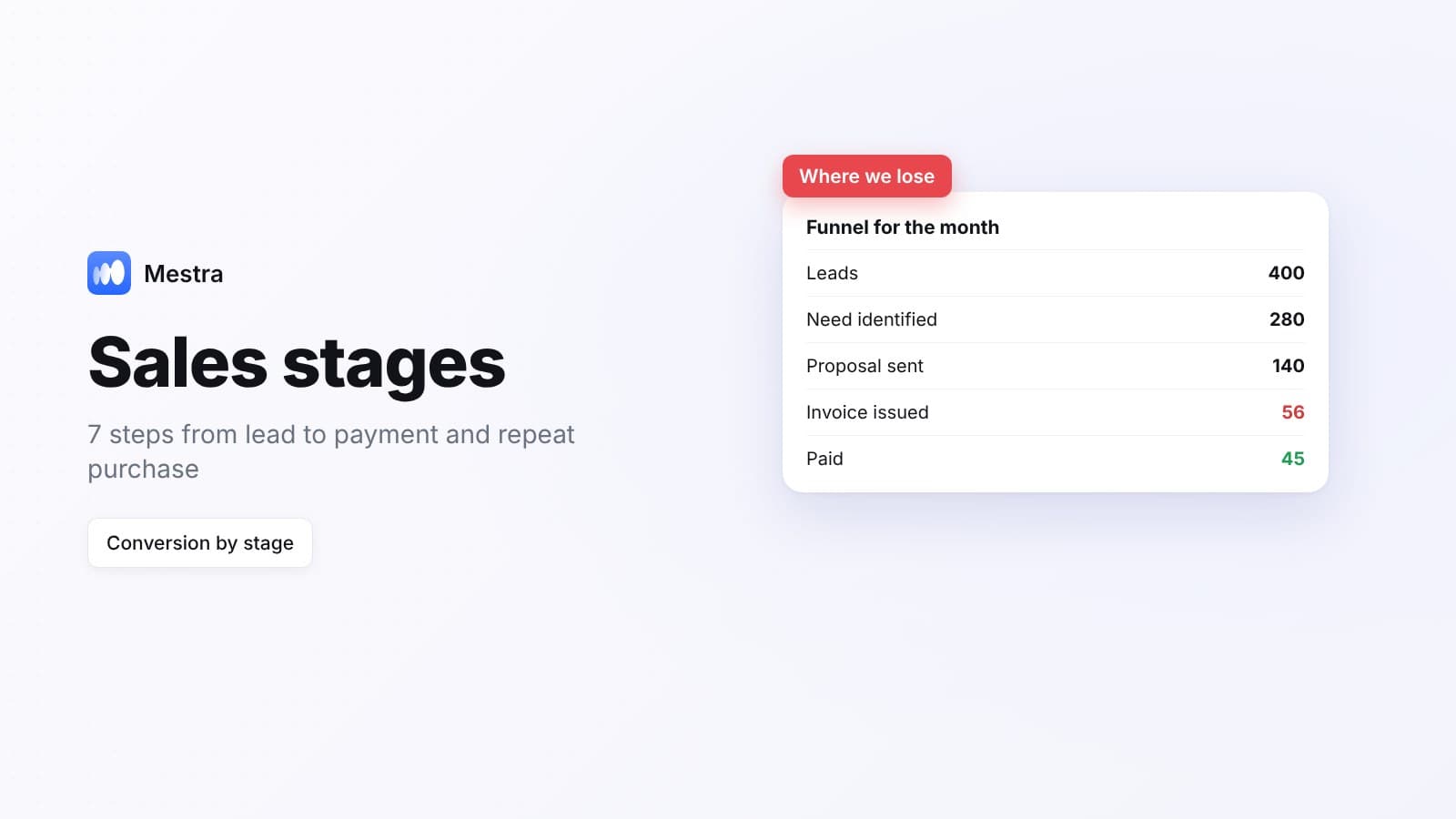
- Describe the deal stages and what must happen at each. More in sales stages.
- Write scripts for key moments: first reply, questions, objections, closing.
- Review real conversations once a week.
- Look at metrics for each manager: response time, conversion by stage, loss reasons.
- Update the scripts based on the reviews.
How it works in Mestra
In Mestra, chats from Telegram, WhatsApp*, Instagram*, MAX and VK come into one window, and deals are run through stages on a kanban board. Analytics shows each manager's conversion, response time, "First reply and SLA" and loss reasons — the basis for reviewing conversations and training the technique.

- Task templates and checklists for deal stages.
- Mentions and comments — the manager can coach a salesperson right in the deal.
- AI widget on the analytics dashboard — from the Standard plan.
FAQ
Which sales technique is most effective?
The one that fits your deal cycle. For high-ticket B2B, SPIN and consultative selling; for quick sales, reply speed and a short script.
How long does it take to roll out a technique?
Basic scripts — within a week. A lasting skill in managers takes 1–2 months of regular conversation reviews.
Do experienced managers need scripts?
Yes, as support for key moments: the first reply, questions, objections. Experienced managers adapt them but keep the structure.
How do I know the technique is working?
By the metrics: conversion by stage rises, time to payment shortens, and the share of losses with the reason "too expensive" falls.
Bottom line
Sales techniques are a tool, not magic: choose them to fit the ticket and deal cycle, embed them in scripts and check them with metrics. Most often the biggest gain comes not from a new technique but from a fast reply and the ability to ask questions.
Mestra — 15 days free, no bank card required: bring leads into one window and see each manager's conversion.
Sources: N. Rackham, "SPIN Selling"; the AIDA model (E. Lewis); figures in this article are illustrative.
*WhatsApp and Instagram are owned by Meta, which is recognised as extremist and banned in Russia.